Description
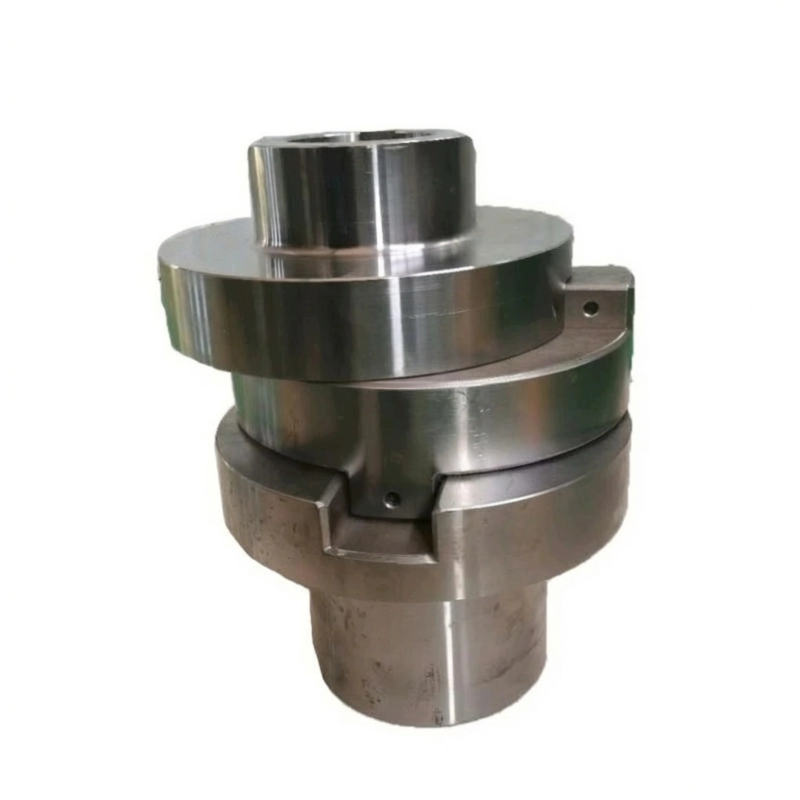
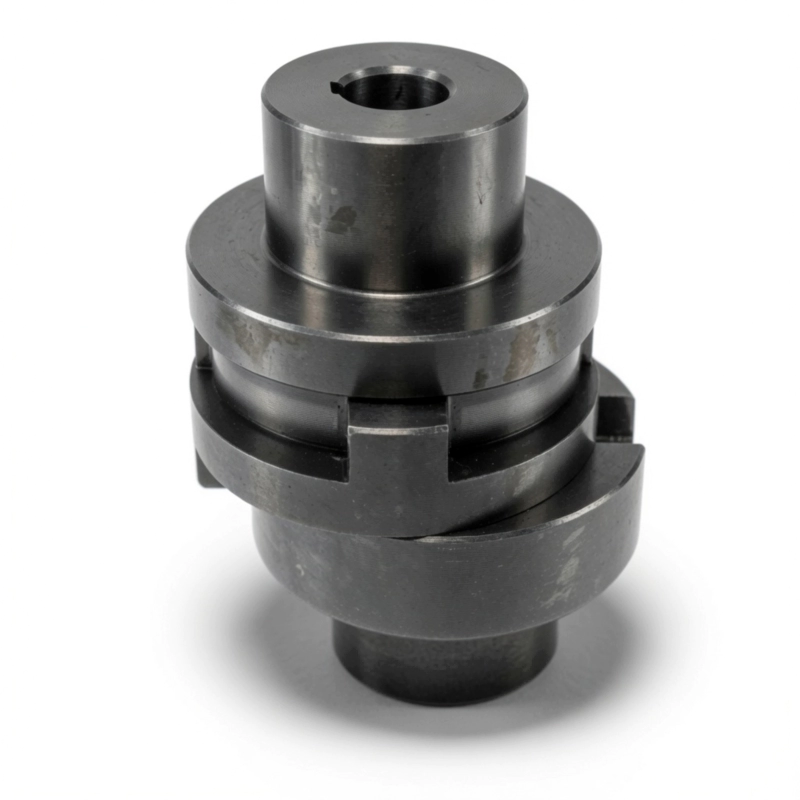
SL400 Heavy-Industrial Cross-Slider Oldham Coupling — 400 mm Cast-Iron Hub for Ship-Propulsion Auxiliary and Major Hoist Drives
The SL400 industrial Oldham coupling sits in the second-from-top position of the SL family — a major capital-equipment asset designed for the ship-propulsion auxiliary, major mine-hoist main, and major hydropower main-auxiliary duty class. With 38 700 N·m rated torque, 400 mm hub OD, single 170 mm shaft, and — for the first time in the SL family — a permissible speed reduced to 80 r/min, the SL400 transmits approximately 325 kW of continuous mechanical power in the ultra-slow-speed, very-high-torque envelope. At 305 kg total mass, the SL400 is a strategic asset for the host equipment: specified through formal multi-discipline engineering review, integrated into the equipment’s design-life and safety-case documentation, and tracked individually on the operator’s asset-management system throughout its installed life.
The reduction in permissible speed from 100 r/min (SL340/SL360) to 80 r/min reflects a continuing engineering trend across the SL family’s upper tier. Hub outside-diameter has now reached 400 mm; at 100 r/min, outer-rim sliding velocity would reach 2.1 m/s — exceeding the optimal envelope for grease-lubricated metallic interfaces in continuous-production duty. The 80 r/min limit reduces this to 1.7 m/s, maintaining lubrication-film integrity over decade-class service intervals. Engineers specifying the SL400 should be aware that this speed limit is not a conservative catalogue choice — it is a real engineering parameter that affects slider service life and lubrication-maintenance scheduling.
Specifications
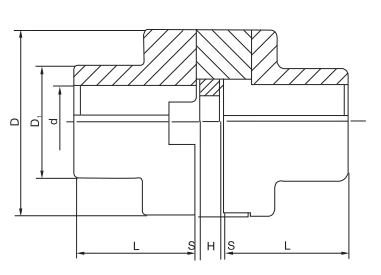
| Parameter | Value |
|---|---|
| Model | SL400 |
| Nominal Torque (Tn) | 38 700 N·m |
| Permissible Speed (n) | 80 r/min |
| Bore (d) | 170 mm |
| Outside Diameter (D) | 400 mm |
| Hub Bore Diameter (D₁) | 260 mm |
| Overall Length (L) | 300 mm |
| Slider Plate Thickness (H) | 48 mm |
| Slider Clearance (S) | 1.0 mm |
| Moment of Inertia | 26.1 kg·m² |
| Mass | 305 kg |
| Radial Misalignment (Δy) | 6.6 mm |
| Angular Misalignment (Δα) | 0.5° |
| Axial Misalignment (Δx) | 6.4 mm |
| Shaft Engagement | Heavy taper-bushed |
| Lubrication | Grease (re-pack 4-monthly) |
Materials
QT600-3 / ZG270-500 Heavy-Hub Options
At SL400 size and torque rating, QT600-3 ductile-iron is the catalogue standard hub specification, with ZG270-500 cast-steel as the engineering-preferred upgrade for major ship-propulsion auxiliary, primary mine-hoist main, and routine 2.5× rated-torque shock-load deployments. Each hub at QT600 specification masses approximately 140 kg. For exceptional safety-critical applications, certified-melt cast-steel variants with elevated material-testing protocols are documented and available through specialised engineering review.
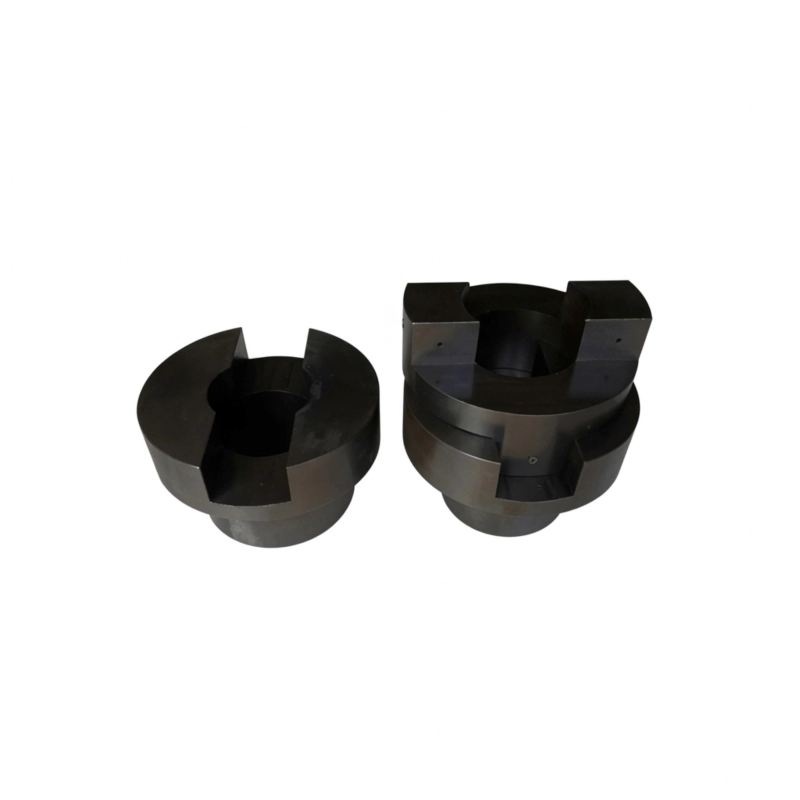
48 mm Heavy Hardened Slider
48 mm thick induction-hardened 45-steel cross-slider catalogue standard; 40Cr alloyed-steel slider with HRC 55 surface hardness for reversal-duty and hoist-class deployments. Slider masses approximately 38 kg with pre-machined lifting-eyelet provisions (M20 threaded). For severe abrasive environments, hardfaced tungsten-carbide overlay variant is offered. For very large vessel propulsion-auxiliary deployments, a fully heat-treated 42CrMo4 alloy slider option is documented.
Heavy Industrial Taper-Bush
Mounting via heavy-duty locking-assembly families designed for the 170 mm bore / 260 mm hub-bore-diameter envelope: Trantorque GT-Heavy 200 series, RINGFEDER 7012 large-bore, KTR-Clampex 200/250 series. Engineering-supplied installation packets include torque-sequence diagrams, locking-bolt-tightening cycles, and post-installation retention verification protocols. Type-certified locking-bolt hardware standard.
The Engineering Profile of Ultra-Heavy Slow-Speed Duty
The SL400’s engineering profile sits at the intersection of three demanding application classes: ship-propulsion auxiliary trains (continuous-duty marine environment, 25–30 year design life, safety-critical role in vessel-propulsion redundancy), major mine-hoist main drives (regulated-industry safety-case integration, zero-backlash transmission requirement, shock-load events from hoist reversal), and major hydropower main-auxiliary drives (extreme service-life expectation of 30–50 years, infrequent maintenance access, regulatory compliance for grid-connected critical infrastructure). The common thread across these applications is that the coupling is a strategic asset whose failure has consequences extending far beyond the equipment-local maintenance economics — into vessel availability, mine safety regulation, or grid-reliability metrics.
The SL400’s response to this engineering profile is built into the architecture and the supplier-relationship model that surrounds it. The architecture delivers the failure-mode predictability (gradual wear of inspectable slider, no fatigue-energy-storage mechanism, no elastomer to age-out, no fluid charge to lose) that any rigorous safety-case analysis demands. The supplier-relationship model delivers the engineering-support depth (FMEA documentation, type-approval support, on-site commissioning supervision, 30-year part-availability commitment) that major capital-equipment specifications require. The combined offering has kept the SL400 on equipment specifications across multiple equipment generations in the ship-propulsion-auxiliary, mining-hoist, and major-hydropower markets — and it remains the senior-engineered choice in these segments today.
For broader engineering discussion of ultra-heavy slow-speed coupling architectures, see Ever-power’s senior engineering portal.
Industry Applications
Ship-Propulsion Auxiliary Lines
Major auxiliary drive lines on large commercial vessels — main-shaft brake actuators, propeller-pitch-change auxiliary, main-thruster auxiliary. Marine type-approval available; QT600 or cast-steel hubs resist saltwater ambient.
⚒️ Primary Mine-Hoist Main Drives
Main-drive coupling on primary mine-hoist installations in deep-shaft underground mining operations. Zero-backlash transmission supports safety-interlock integration; gradual failure mode supports SIL 1/2 safety-case application.
Major Hydropower Main-Aux
Main-auxiliary drive coupling on large hydropower-station governor-aux, intake-cleaning, and main-tailgate drives. 30+ year design-life alignment with hydropower-infrastructure asset profile.
Major Cement-Kiln Main
Main-drive coupling on major-capacity cement-kiln rotating-section drives at the top of plant production-rating envelope. Substantial misalignment tolerance absorbs full kiln-shell thermal expansion.
⛏️ Major Minerals-Mill Main
Major-mill main-drive couplings on the largest tier of primary minerals-processing equipment. SAG-mill and autogenous-mill primary drives at the upper end of installed-base capacity.
⚓ Major Marine Crane Slewing
Main slewing drives on heavy-lift shipyard cranes, floating heavy-lift vessels, and major offshore-supply-vessel crane installations. Substantial shock-load tolerance addresses crane-indexing events under wave-motion ambient.
Why Choose Ever-power
Quality & Compliance
SL400 production runs under ISO 9001:2015 with full melt-traceability per cast-iron, ductile-iron, and cast-steel heat. Documentation pack covers RoHS, REACH, CE conformity, comprehensive FMEA documentation, 30-year fatigue-endurance analysis, and detailed shock-load-profile compatibility statements. Marine type-approval (Lloyd’s Register, DNV-GL, ABS, BV) supported via engineering review. Mining safety-case integration documentation tailored to regulatory regime (MSHA, MHSA, regional equivalents).
Customisation
Catalogue bore 170 mm; custom-bore variants from 160 mm to 180 mm produced under engineering review with 6-week lead time. QT600-3 ductile-iron standard, ZG270-500 cast-steel engineering-preferred. 42CrMo4 alloy-slider variant for major vessel propulsion-auxiliary applications. Heavy taper-bushed mounting via certified-bolt locking-assembly families. Hardfaced tungsten-carbide slider variant for severe abrasive environments.
Strategic-Asset Aftermarket
SL400 slider plates and alloy variants stocked for 2-business-day shipment. Mass per coupling 305 kg; sea-freight in welded-steel transport cradle with secondary shock-absorbing internal packaging. English-speaking engineering desk responds within 24 hours. 30-year part-availability commitment for slider plates and consumables. On-site engineering supervision available for major installations under separate commercial terms.
Customer Reviews & Case Studies
★★★★★
Guatemala — Geothermal Power Generation
Used in: Main-auxiliary drive coupling on a 25 MW geothermal-power station turbine-auxiliary train.
Feedback: “Specified the SL400 with ZG270-500 cast-steel hubs after detailed engineering review against gear-coupling and large flexible-disc alternatives. Eight years of three-shift continuous duty without unplanned events. The 30-year part-availability commitment was a non-negotiable requirement in our utility-scale generation specification. Excellent engineering relationship throughout the major-equipment lifecycle.”
★★★★★
El Salvador — Underground Gold-Mining Operation
Used in: Primary mine-hoist main-drive coupling on a deep-shaft underground gold-mining installation.
Feedback: “Hoist-main duty requires impeccable safety-case documentation and regulatory regime compliance. The SL400 with QT600 hubs, 40Cr alloy slider, and certified-bolt locking-assembly mounting has met every regulatory and reliability-engineering review at this site over 6 years of continuous service. FMEA documentation was material in our safety-management-system qualification — saved approximately 4 months of compliance-review work versus alternative specifications.”
★★★★☆
Trinidad and Tobago — LNG-Production Compressor Train
Used in: Main-auxiliary drive coupling on an LNG production-train booster-compressor auxiliary.
Feedback: “Continuous-process LNG duty with extreme reliability requirements and stringent safety-case integration. The SL400 with ZG270-500 cast-steel hubs and synthetic-grease specification has handled 5 years of continuous duty without unplanned events. Knock one star only because the initial type-approval lead time for our specific class-society requirements (BV) was 16 weeks rather than the standard 12 — eventually addressed through dedicated engineering attention. Otherwise outstanding strategic-asset specification.”
Frequently Asked Questions
Why is permissible speed 80 r/min rather than 100 r/min?
At 400 mm OD, operation at 100 r/min would produce outer-rim sliding velocity of 2.1 m/s — exceeding the optimal envelope for grease-lubricated metallic interfaces in continuous-production duty. The 80 r/min limit reduces this to 1.7 m/s, maintaining lubrication-film integrity over decade-class service intervals. For applications requiring sub-rated speeds (50–80 r/min), the SL400 operates at full performance throughout its envelope.
What marine type-approvals are supported?
Lloyd’s Register (LR), DNV-GL (now DNV), American Bureau of Shipping (ABS), Bureau Veritas (BV), China Classification Society (CCS), Russian Maritime Register (RMRS), and other major class societies. Type-approval engineering documentation includes material certificates, dimensional inspection records, comprehensive FMEA analysis, shock-load performance verification, fatigue-endurance analysis, and class-society-specific compliance statements. Typical lead time is 12–16 weeks beyond standard delivery; cost depends on class-society fee schedules.
How is the SL400 installed at 305 kg?
Installation requires substantial hoist support — typically 2-ton or larger overhead-crane capacity. Each hub at QT600 masses approximately 140 kg; slider plate 38 kg; assembled coupling 305 kg total. Pre-machined lifting-eyelet provisions (M20 threaded) on both hub-faces are standard. Installation procedure requires precision shaft-alignment to within 1 mm parallel before locking-assembly engagement, then sequenced bolt-tightening per supplied torque-sequence diagram. Typical installation time is 3–4 hours for a competent crew with appropriate hoist support.
Is on-site engineering supervision available?
Yes. For major capital-equipment installations of the SL400, Ever-power offers on-site engineering supervision during installation and commissioning, with the engineer remaining for the duration of host-equipment commissioning and signing-off the coupling-installation portion of the equipment hand-over documentation. Service is offered under separate commercial terms; cost is typically modest relative to the host-equipment value and avoids the risk of installation-attributable warranty disputes.
What is the documented service life under typical major-equipment duty?
Under typical major-equipment continuous-production duty (60–70 % rated load, 60 r/min average operating speed, parallel offset below 2 mm typical), the QT600 ductile-iron hub section is expected to remain in service for the full 30+ year design life of the host equipment, with slider replacement at 10–12 year intervals during major plant or vessel overhauls. With ZG270 cast-steel hub upgrade, the design margin extends accordingly. Cast-iron/cast-steel hubs have field-service track record of 30–40 year retention across multiple slider-replacement cycles.
Quote SL400 for Strategic-Asset Drives
For ship-propulsion auxiliary, primary mine-hoist main, major hydropower main-auxiliary, and major cement-kiln main applications in the 325 kW ultra-slow-speed power class, the SL400 is Ever-power’s senior strategic-asset specification. Browse the wider SL series catalogue, read about Ever-power’s strategic-asset supply capability, or move directly to a B2B enquiry below.