Description
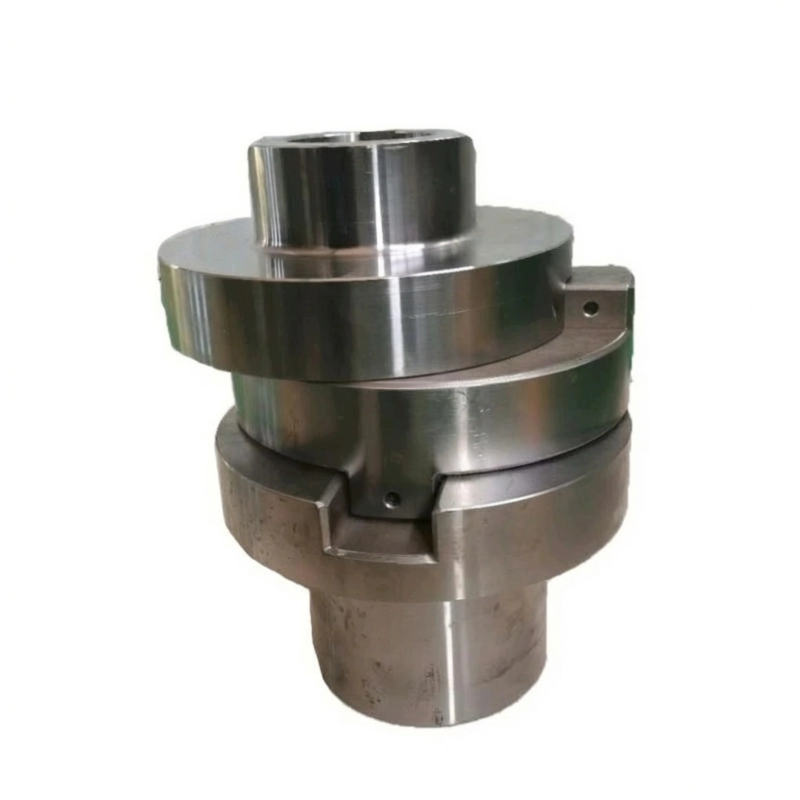
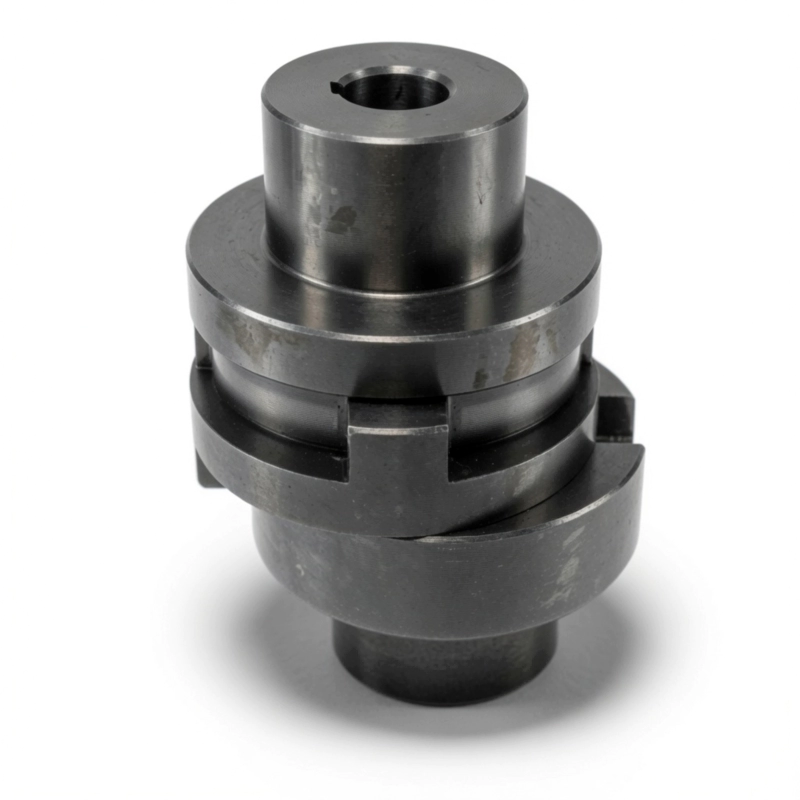
SL280 Heavy-Industrial Cross-Slider Oldham Coupling — 280 mm Cast-Iron Hub at the Threshold of Ultra-Heavy Duty
The SL280 industrial Oldham coupling sits at the threshold between mid-heavy and ultra-heavy industrial drive duty. At 10 000 N·m rated torque — the first five-figure rating in the SL family — 280 mm hub OD, 110–120 mm bore range, and 250 r/min permissible speed, the SL280 transmits 250–330 kW of continuous mechanical power. This is the duty class of large process-mill auxiliaries, marine main-shaft auxiliary trains, primary mining-conveyor head drives, and the heavier-end metallurgical-process pumps. At this scale, the SL280 is the kind of asset that gets specified by name in the plant’s reliability-engineering documentation and tracked individually on the maintenance-management system across decades of installed life.
For the engineer considering the SL280 against alternatives — large gear couplings, double-flex disc-pack couplings, large fluid couplings, or oversized elastomer-spider designs — the SL280’s value proposition rests on three architectural pillars that the alternatives cannot simultaneously deliver. First, the misalignment envelope: 4.4 mm radial offset, 0.5° angular, 3.8 mm axial. No comparable disc-pack or precision-gear coupling reaches even half this envelope without going to a multi-element spacer-shaft arrangement. Second, the failure mode: gradual wear of an inspectable metallic slider, not catastrophic-event failure of a fatigued elastomer or disc-pack. Third, field serviceability: slider replacement during planned shutdowns without precision laser-alignment, hubs remaining keyed to their shafts. These three properties define the SL280’s place in continuous-production-plant engineering.
Specifications
| Parameter | Value |
|---|---|
| Model | SL280 |
| Nominal Torque (Tn) | 10 000 N·m |
| Permissible Speed (n) | 250 r/min |
| Bore Range (d) | 110 – 120 mm |
| Outside Diameter (D) | 280 mm |
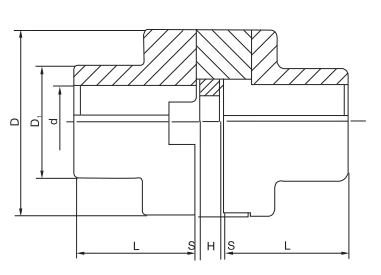
| Hub Bore Diameter (D₁) | 170 mm |
| Overall Length (L) | 200 mm |
| Slider Plate Thickness (H) | 33 mm |
| Slider Clearance (S) | 1.0 mm |
| Moment of Inertia | 3.0 kg·m² |
| Mass | 94.3 kg |
| Radial Misalignment (Δy) | 4.4 mm |
| Angular Misalignment (Δα) | 0.5° |
| Axial Misalignment (Δx) | 3.8 mm |
| Shaft Engagement | Keyway or taper-bushed |
| Lubrication | Grease (re-pack 6-monthly) |
Materials
QT500-7 Ductile-Iron Hubs (Standard)
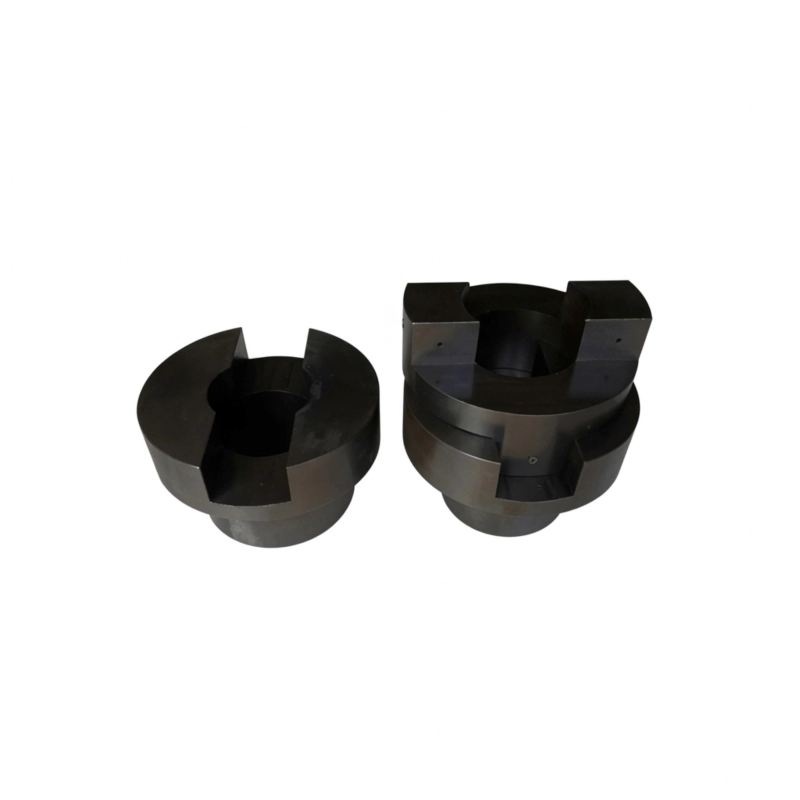
At SL280 size the QT500-7 ductile-iron hub variant is the documented standard specification. Each hub masses approximately 45 kg, with section thickness engineered to a 3× safety factor against the rated 10 000 N·m peak. The spheroidal-graphite microstructure’s superior fracture toughness is non-negotiable at this duty class — shock-load endurance is the dominant reliability vector, and grey-iron hubs simply do not provide adequate margin against routine 1.5–2× rated-torque events.
Heavy Hardened Steel Slider
33 mm thick induction-hardened 45-steel cross-slider as standard; 40Cr alloyed-steel slider with HRC 55 surface hardness for reversal-duty deployments (marine winches, hot-strip-mill auxiliaries). At ~8 kg, the slider becomes a non-trivial handling item during field replacement; Ever-power supplies dedicated lifting eyelets pre-machined on customer request for hoist-supported maintenance.
Keyway or Taper-Bushed Mounting
Standard catalogue is H7-reamed bore with parallel keyway to GB/T 1096 and M20 set-screw. For mining-conveyor, large-mill, and marine deployments, taper-bushed mounting via RINGFEDER 7012, Trantorque, or KTR-Clampex locking-assembly families is the documented engineering best practice — eliminating keyway shear entirely under the routine shock-load profile. The SL280 hub geometry accepts these locking-assembly families without secondary machining.
Crossing the Five-Figure Torque Threshold
The transition from sub-10 000 N·m to 10 000 N·m and above is not merely a numerical step. At this duty class, the host motor is typically a 315–400 kW induction unit with substantial starting-torque headroom. The connected gear-reducer or fluid coupling typically has its own reflected-inertia profile that adds to the coupling’s effective load during start-up transients. And the driven equipment is often a process mill, a large pump, or a heavy conveyor with a significant inrush-torque requirement during loaded start. The coupling must transmit all of this while absorbing the realistic misalignment envelope of large industrial frame fabrications — typically 2–3 mm of parallel offset that accumulates from machine-base settling, thermal growth, and bearing-housing tolerance stack-up.
The SL280’s architecture handles this combination of load and misalignment without flexure of any metallic component. The 4.4 mm parallel-misalignment envelope provides comfortable margin against realistic frame tolerance, even with thermal-growth excursions during plant warm-up. The 3.8 mm axial-displacement allowance forgives the cumulative expansion of long shaft trains as they reach operating temperature. And the cast-iron-plus-steel material stack absorbs shock-load events through their substantial section modulus, with no fatigue mechanism in the load path. The combined effect is a coupling that exhibits a strikingly flat reliability profile across years of continuous-production duty — precisely the failure characteristic that plant reliability engineering values.
For broader engineering background on ultra-heavy industrial cross-slider applications, our heavy-coupling engineering portal covers the kinematic, tribological, and structural-analysis frameworks in detail.
Industry Applications
Large Process-Mill Auxiliaries
Auxiliary drive trains on large ball mills, SAG mills, and roller-press auxiliaries in cement and minerals processing. Misalignment tolerance handles the substantial frame deflection of large mill structures under load.
Marine Main-Shaft Auxiliary
Auxiliary drives on large bow-thrusters, stern-thrusters, and main-shaft brake actuators in commercial vessels. QT500 ductile-iron hubs resist the saltwater-spray ambient of marine engineering rooms.
⛏️ Primary Mining-Conveyor Heads
Head-pulley drive couplings on heavy overland mining conveyors (1400–1800 mm width). Slider absorbs the inrush profile of loaded-conveyor start without flexure of cast-iron sections.
️ Heavy Process-Industry Pumps
Large centrifugal-pump drives in petrochemical, fertiliser, and large desalination installations. The 4.4 mm misalignment envelope absorbs the thermal-growth profile of long process-pump shaft trains.
Port & Terminal Equipment
Stacker, reclaimer, and ship-loader auxiliary drives in bulk-material port terminals. Salt-air-tolerant QT500 hubs and synthetic-grease specification support coastal infrastructure reliability.
⚡ Power-Station Auxiliaries
Boiler-feed pump and forced-draft fan drives on thermal-power-station auxiliary trains. Long-cycle reliability across the 30+ year design life of power-station infrastructure.
Why Choose Ever-power
Quality & Compliance
SL280 production runs under ISO 9001:2015 with full melt-traceability per cast-iron heat. Documentation pack includes RoHS, REACH, and CE conformity declarations as standard. For marine customers, NACE MR0175 sour-service compatibility statements and Lloyd’s Register or DNV-GL type-approval documentation can be supplied with appropriate engineering review. For power-station customers, supplementary documentation covering 30-year design-life fatigue analysis is available.
Customisation
Catalogue bore range 110–120 mm; oversized variants up to 125 mm produced under engineering review. Imperial-bore variants (4-3/8″, 4-1/2″, 4-3/4″) supported for North American export markets. QT500 ductile-iron hub is the engineering recommended specification. Taper-bushed mounting via standard locking-assembly families is documented and routinely supplied for shock-load installations.
Critical-Asset Aftermarket
SL280 slider plates and 40Cr alloy variants stocked for 2-business-day shipment. Mass per coupling 94.3 kg; sea-freight in heavy-duty reinforced crating with secondary shock-absorbing foam standard. English-speaking engineering desk responds within 24 hours. For continuous-production critical-asset customers, pre-negotiated emergency-replacement protocols guarantee 5-working-day delivery from confirmed PO.
Customer Reviews & Case Studies
★★★★★
Cyprus — Aggregate-Quarry Operator
Used in: Primary-conveyor head-pulley drive on a limestone quarry producing 1.2 Mt/y.
Feedback: “Loaded-conveyor start under island-summer ambient was a continuous reliability headache with our original spider-coupling specification — average service interval was 14 months. The SL280 with QT500 hubs and taper-bushed mounting has now passed 6 years with one slider replacement during a planned quarry shutdown. Total ownership economics are clearly favourable; we have standardised this size class across the operation.”
★★★★★
Malta — Port-Terminal Operator
Used in: Stacker-reclaimer auxiliary drive on a bulk-cargo terminal.
Feedback: “Sea-air ambient and constant high-utilisation duty had been challenging for every flexible-coupling architecture we tried. The SL280 with QT500 hubs, calcium-sulfonate grease, and IP54 sealed coupling guard has handled 5 years of continuous duty with one slider replacement during a planned terminal overhaul. The 4.4 mm misalignment envelope has comfortably absorbed the cumulative thermal-growth profile of the stacker boom.”
★★★★☆
Iceland — Geothermal Power Station
Used in: Cooling-tower fan auxiliary drive on a geothermal-power generation facility.
Feedback: “Continuous outdoor duty in sub-Arctic ambient (-25 °C winter, +12 °C summer) required synthetic-grease specification and careful design review. The SL280 has now passed 7 years of continuous duty without any unplanned event. Knock one star only because the initial synthetic-grease selection guidance from the catalogue could be more prominent for extreme-cold service — engineering had to clarify by separate query during commissioning.”
Frequently Asked Questions
What is the documented torque reserve factor at this size?
Standard SL280 catalogue specification carries a 2.5× torque-reserve factor against the host-equipment continuous rating — i.e., for a 10 000 N·m continuous duty, the SL280’s actual peak-torque capacity is approximately 25 000 N·m before any permanent-deformation risk. With the QT500 ductile-iron hub variant this rises to approximately 30 000 N·m peak. This generous reserve accommodates the routine 1.5–2× rated-torque shock events typical of large industrial drives.
How is the SL280 handled and installed at 94 kg?
Lifting and handling at this mass requires hoist or overhead-crane support. Each hub masses ~45 kg, slider plate ~8 kg, with the assembled coupling at 94.3 kg total. Ever-power supplies pre-machined lifting eyelets on the hubs on customer request, and the standard packaging includes installation instructions covering hoist-supported assembly with appropriate sling and shackle hardware. Installation by a competent crew is typically a 90-minute task including precision-shaft positioning.
What is the recommended FMEA framework for the SL280?
Ever-power maintains a documented Failure Mode and Effects Analysis for the cross-slider Oldham architecture, available on request. The framework identifies three primary failure modes: slider face wear (gradual, inspectable, plannable replacement), grease degradation (gradual, scheduled-maintenance reversible), and hub keyway shear (rare, prevented entirely by taper-bushed mounting). Each mode is rated for severity, occurrence, and detection per IEC 61882 conventions. The FMEA documentation supports reliability-engineering review and safety-case file integration.
Can the SL280 be specified for SIL 1 / SIL 2 applications?
The SL280 itself is a mechanical asset with no electrical components, and does not require independent SIL certification. For deployment in safety-instrumented systems (SIS), the coupling’s documented FMEA, its gradual failure mode, and its predictable maintenance routine support straightforward SIL 1 and SIL 2 integration as part of broader safety-function analysis. Please consult Ever-power engineering for application-specific safety-case documentation requirements.
What is the documented 30-year fatigue endurance margin?
For typical industrial duty (60 % rated load, 250 r/min average, parallel offset below 1.5 mm), the QT500 ductile-iron hub section accumulates fatigue damage at less than 5 % of total endurance over a 30-year service life. This leaves substantial margin against duty-cycle variations and atypical load events. Cast-iron hubs in field-service historically remain dimensionally stable for 25–35 years across multiple slider-replacement cycles.
Quote SL280 for Critical Industrial Drives
For large process-mill, marine main-shaft auxiliary, primary mining-conveyor, and power-station auxiliary installations in the 250–330 kW power class, the SL280 is the senior-engineered specification of choice across continuous-production heavy industrial duty. Browse the wider SL series catalogue, read about Ever-power’s critical-asset supply capability, or move directly to a B2B enquiry below.