Description
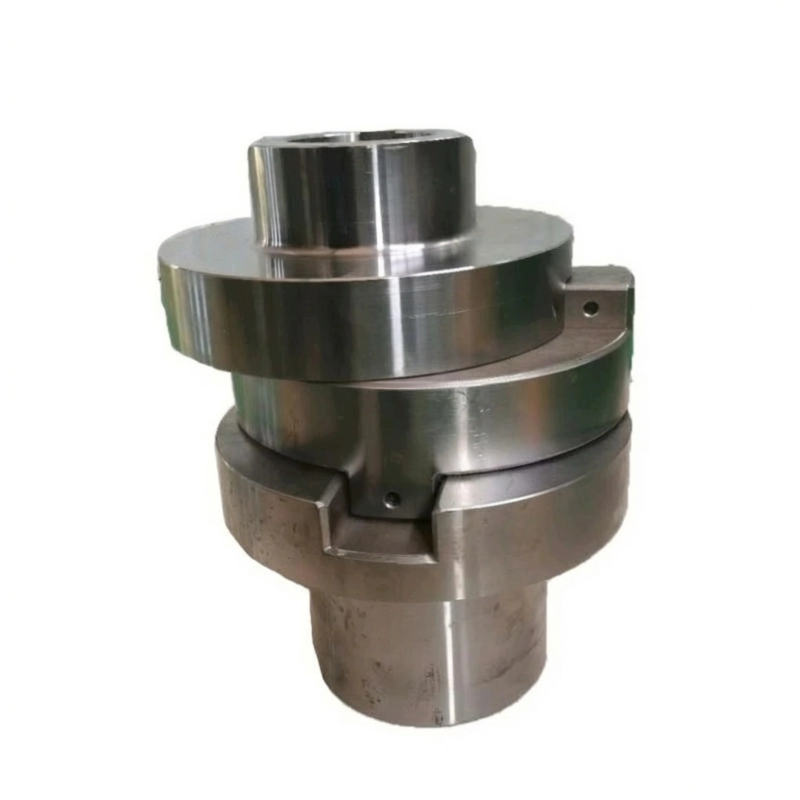
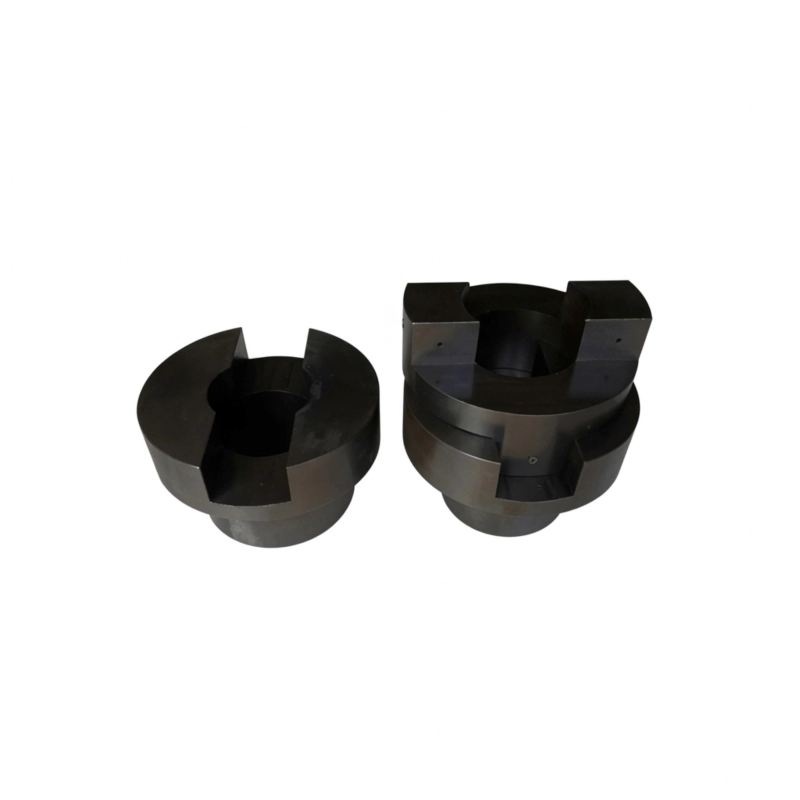
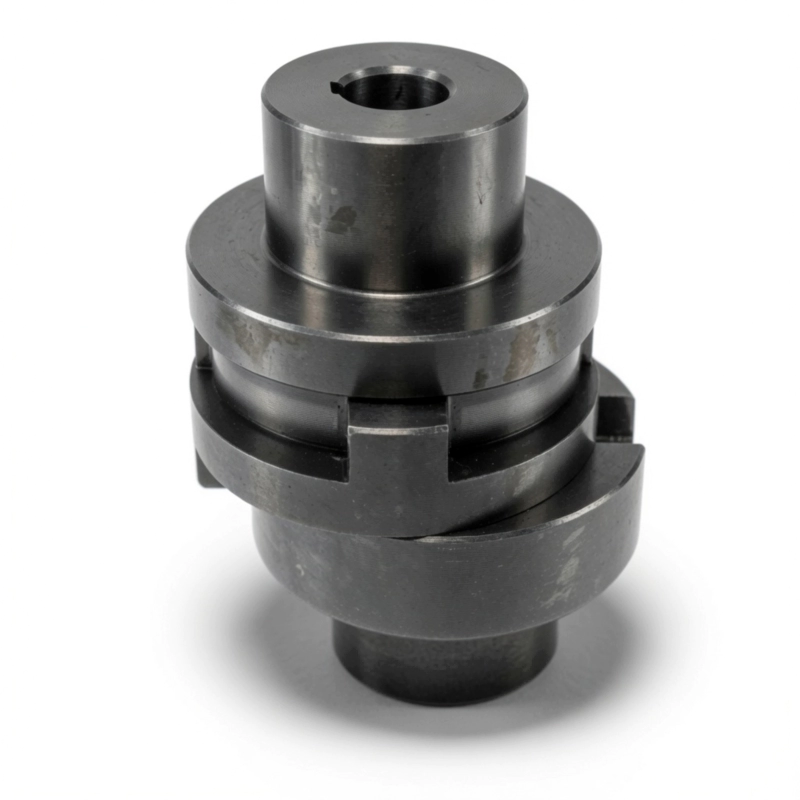
SL190 Heavy-Industrial Cross-Slider Oldham Coupling — 190 mm Cast-Iron Hub for Cement, Marine and Large Process Drives
The SL190 industrial Oldham coupling moves the SL family into the upper-medium duty class. With 3 200 N·m rated torque, 190 mm hub OD, 75–80 mm bore range, and 250 r/min permissible speed, the SL190 transmits 55–85 kW of continuous mechanical power. This is the duty profile of cement-plant separator drives, marine bow-thruster auxiliary lines, large industrial-process pump installations, and the mid-stage drives of paper-machine wet-end and pulp-mill consistency control. At these power levels, the coupling becomes a critical-path component — a failure stops the plant, the cargo operation, or the production line, and the consequence is measured in hours of revenue lost.
The engineering decision at the SL190 size shifts noticeably. At smaller sizes, the trade-off was mostly between cast-iron Oldham, elastomer-spider, and grid couplings. At the SL190 size and above, the competitive set includes flexible-disc-pack couplings, gear couplings, and large diaphragm couplings — each with a substantially higher unit cost but specific performance advantages. The SL190 wins selection battles in this competitive space through three structural factors: a substantially wider parallel-misalignment envelope (3.0 mm versus typical 0.5 mm for disc-pack), a slider wear part that is field-replaceable in less than a shift, and a failure mode that is gradual and inspectable rather than catastrophic.
Specifications
| Parameter | Value |
|---|---|
| Model | SL190 |
| Nominal Torque (Tn) | 3 200 N·m |
| Permissible Speed (n) | 250 r/min |
| Bore Range (d) | 75 – 80 mm |
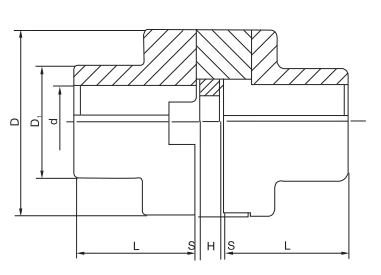
| Outside Diameter (D) | 190 mm |
| Hub Bore Diameter (D₁) | 110 mm |
| Overall Length (L) | 140 mm |
| Slider Plate Thickness (H) | 29 mm |
| Slider Clearance (S) | 0.5 mm |
| Moment of Inertia | 0.5 kg·m² |
| Mass | 31.5 kg |
| Radial Misalignment (Δy) | 3.0 mm |
| Angular Misalignment (Δα) | 0.5° |
| Axial Misalignment (Δx) | 2.2 mm |
| Shaft Engagement | Keyway + setscrew |
| Lubrication | Grease (re-pack annually) |
Materials
Heavy-Section HT250 / QT500 Hubs
Hubs are sand-cast in HT250 grey iron or QT500-7 nodular iron, with stress-relief annealing prior to all machining. Hub section thickness has been engineered with a 3× safety factor against the 3 200 N·m rated torque, ensuring fatigue-life margin that comfortably exceeds expected host-equipment service life. For marine and cement-plant deployments, the QT500 variant’s higher fracture toughness is the documented engineering best practice.
Substantial Steel Slider Section
The 29 mm thick cross-slider is induction-hardened 45-steel (or 40Cr alloyed steel for reversal-duty deployments). The substantial section thickness provides essentially unlimited fatigue life under steady-state torque, with replacement triggered by gradual wear of the four sliding faces rather than fatigue cracking. Bronze CuSn10 slider variant available for electrical-isolation applications, with appropriate torque de-rating.
Heavy-Industrial Shaft Mounting
H7-reamed hub bore with parallel keyway to GB/T 1096 (DIN 6885 / JIS B 1301). M16 set-screw for axial location. For installations with very high cyclical-load profile (cement separators, marine winches), taper-bushed mounting via standard locking-assembly families is documented as the engineering-preferred alternative — eliminating keyway shear entirely and supporting unlimited hub removal-and-reinstall cycles.
Engineering Considerations for 55–85 kW Drives
At the SL190’s power class, the host motor is typically a 75–110 kW industrial induction unit driven through a VFD or a soft-starter, with substantial starting-torque headroom that can drive the coupling well into its peak-torque envelope during inrush events. The architectural advantage of the cross-slider Oldham design at this scale is that the inrush torque is absorbed by the cast-iron hub section and the steel slider — neither of which has a fatigue mechanism in the shock-load path. By contrast, an equivalently-rated flexible-disc coupling has the disc-pack as its load-bearing element, and every inrush event accumulates fatigue damage in the discs that ultimately limits service life.
The thermal-growth profile at this duty class is also worth attention. A 75 kW motor delivers approximately 5 kW of waste heat to its end-bell during operation, and the connected drive-train equipment typically contributes a further 2–3 kW of bearing-friction heat. Total thermal input to the coupling region is 7–8 kW, which produces a 30–50 °C temperature rise above ambient over a typical 4-hour startup window. The corresponding thermal expansion of the motor and driven-shaft housings can easily exceed 1 mm — well within the SL190’s 3.0 mm parallel-misalignment envelope, but a challenge for any flexible-disc coupling without an additional spacer-shaft arrangement.
Industry Applications
Cement-Plant Separator Drives
Drive coupling between motor and high-efficiency separator vertical shaft. Thermal-growth tolerance absorbs the 1–2 mm of separator-rotor housing expansion during plant start-up.
⚓ Marine Bow-Thruster Auxiliary
Coupling between auxiliary motor and bow-thruster gearbox input on small ferries, harbour craft, and offshore-supply vessels. QT500 ductile-iron hubs resist saltwater spray ambient.
⛰️ Aggregate Crusher Drives
Secondary and tertiary crusher auxiliary drives on aggregate-quarry and mining process plants. Slider absorbs the shock loads of inhomogeneous rock-feed events.
Pulp & Paper Wet-End
Stock-pump and wet-end consistency-pump drives on tissue, board, and newsprint machines. Slider isolates motor frame from the chemical-process ambient of pulp-stock circulation.
️ Refinery Tank Mixers
Storage-tank agitator drives in petroleum refineries and chemical-process tank farms. Conductive (carbon-filled) slider variant supports ATEX Zone 2 installation alongside Ex-rated host motors.
Steel-Mill Aux Conveyors
Scale-pit conveyor and finishing-train auxiliary drives in hot-strip and bar-mill steel facilities. Cast-iron section tolerates elevated-temperature ambient of mill environments.
Why Choose Ever-power
Quality & Compliance
SL190 production runs under ISO 9001:2015 with full melt-traceability per cast-iron heat. Documentation pack covers RoHS, REACH, and CE conformity declarations. For marine customers, NACE MR0175 sour-service material compatibility documentation is available for QT500 hub variants. For ATEX Zone 2 installations, conductive-slider variant carries supplementary ATEX-compatible material declarations.
Customisation
Catalogue bore range 75–80 mm; oversized variants up to 85 mm produced under engineering review. Imperial-bore variants (3″, 3-1/8″, 3-1/4″) supported for North American markets. QT500-7 ductile-iron hub upgrade is the documented best practice for marine, cement, and high-shock industrial deployments. Taper-bushed mounting via standard locking assemblies is the recommended alternative for installations requiring shock-load capacity beyond standard catalogue.
Aftermarket
SL190 slider plates stocked for 2-business-day shipment. 40Cr alloy slider and bronze CuSn10 isolation variants available within 1 week. Mass per coupling is 31.5 kg; sea-freight standard. English engineering desk responds within 24 hours. For fleet operators, buffer-stock programmes at customer-nominated 3PL locations are routine.
Customer Reviews & Case Studies
★★★★★
Croatia — Cement Production Operator
Used in: Separator drive coupling on a 75 t/h vertical-roller-mill installation.
Feedback: “Specified SL190 with QT500 hub upgrade as a replacement for the original gear-coupling spec. Five years of continuous duty with zero coupling-attributable downtime events. Annual grease repack and slider inspection during planned mill shutdowns is the entire maintenance routine. Mill availability has improved measurably as a result of removing the gear-coupling-related downtime that was previously a recurring item.”
★★★★★
Serbia — Inland Harbour Operations
Used in: Bow-thruster auxiliary drives on harbour push-boats serving Danube river-port operations.
Feedback: “Push-boat duty includes frequent reversal events as boats manoeuvre around moored barges. Specified the 40Cr alloy slider variant; six years of service across 12 vessels with one scheduled slider replacement per vessel. QT500 ductile-iron hubs show no corrosion despite continuous river-water ambient. Excellent fleet specification.”
★★★★☆
Bosnia and Herzegovina — Aggregate Quarry
Used in: Secondary cone-crusher auxiliary drive on a limestone-quarrying operation.
Feedback: “Inhomogeneous rock-feed events produce routine 1.8× rated-torque shock loads. The SL190 has handled this for 4 years without an unplanned event — versus our previous spider coupling, which had a 14-month average service interval. Knock one star only because we wish for a more prominent shock-load rating in the catalogue documentation, beyond the implicit 2× safety factor in the standard spec sheet.”
Frequently Asked Questions
Can the SL190 be installed in ATEX Zone 2?
Yes — specify the conductive carbon-filled slider variant, which prevents static-electricity buildup at the metallic interfaces. The coupling itself contains no electrical components and does not require independent ATEX certification, but the conductive slider is the design feature that supports installation alongside Ex-rated motors in Zone 2 areas. ATEX Zone 1 installations require additional case study and engineering review.
What is the catalogue shock-load tolerance?
The SL190 standard specification tolerates instantaneous shock loads up to 2× rated (i.e., 6 400 N·m) without permanent damage. With the QT500 ductile-iron hub upgrade, this rises to approximately 3× rated (9 600 N·m). For dedicated shock-load applications, please consult engineering for a documented duty-profile review.
How is the SL190 protected against saltwater exposure?
Three measures apply. First, QT500 ductile-iron hub variant for substantially improved corrosion resistance over HT250. Second, calcium-sulfonate grease specification, which resists wash-out under chloride-rich ambient. Third, sealed coupling guard to IP54-equivalent to minimise direct saltwater ingress at the slider interfaces. With these three measures, the SL190 has multi-year service history in marine and coastal deployments.
How does the SL190 compare to a flexible disc-pack coupling?
Flexible disc-pack couplings at the 3 200 N·m rating offer slightly lower mass (typically 25 kg vs the SL190’s 31.5 kg) and potentially higher peak-torque endurance. The SL190 offsets these with a 6× wider parallel-misalignment envelope, substantially simpler installation, field-replaceable wear parts, and absent fatigue mechanism in the load path. For most installations the SL190’s lifecycle-cost economics are clearly favourable.
What are the recommended sea-freight and packaging arrangements?
31.5 kg mass per coupling supports standard sea-freight in returnable wooden crates. For volume orders, individual couplings are packed in vacuum-sealed plastic film inside protective cardboard, with the slider plate separated and packaged individually. This packaging protocol has demonstrated zero transit-damage incidence across multi-decade shipping history.
Quote SL190 for Heavy-Process Drives
For cement-plant, marine, large industrial-process, and pulp-and-paper OEM equipment in the 55–85 kW continuous power band, the SL190 has been a fleet-standard specification across multiple equipment generations. Browse the wider SL series catalogue, learn about Ever-power’s industrial supply network, or move to enquiry below.