Description
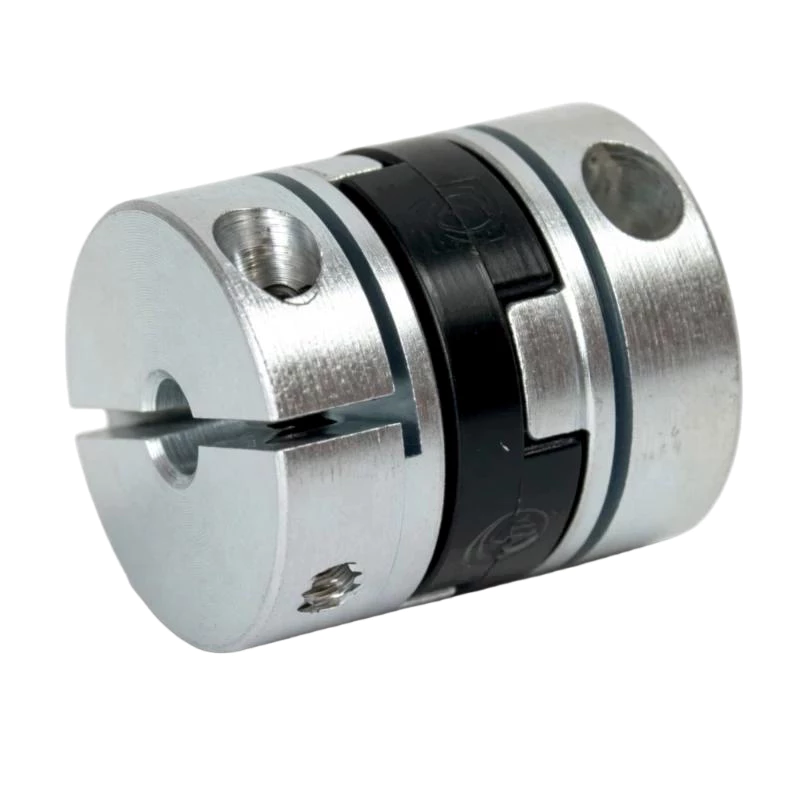
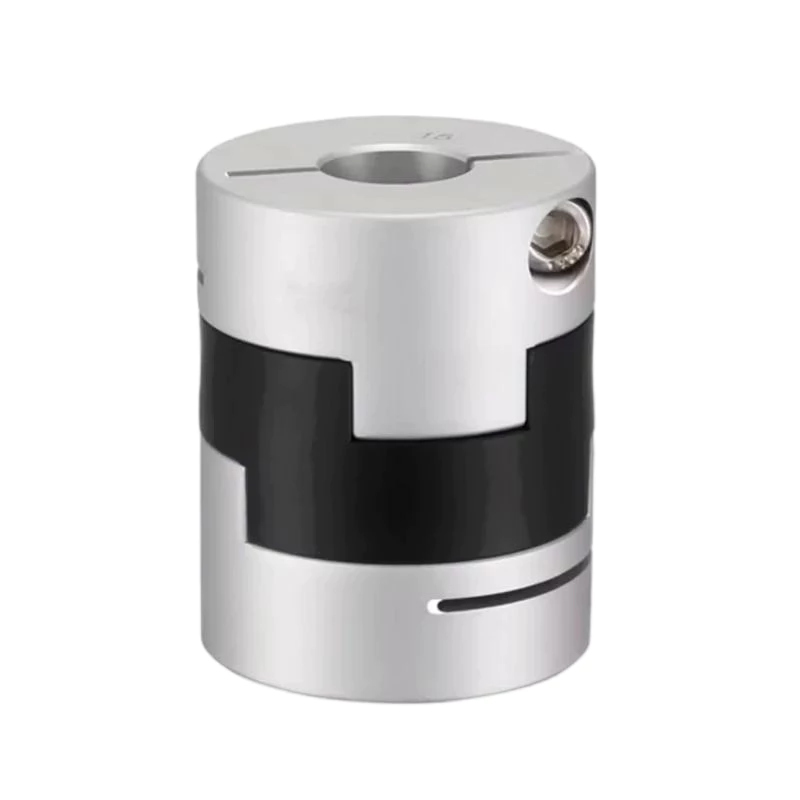
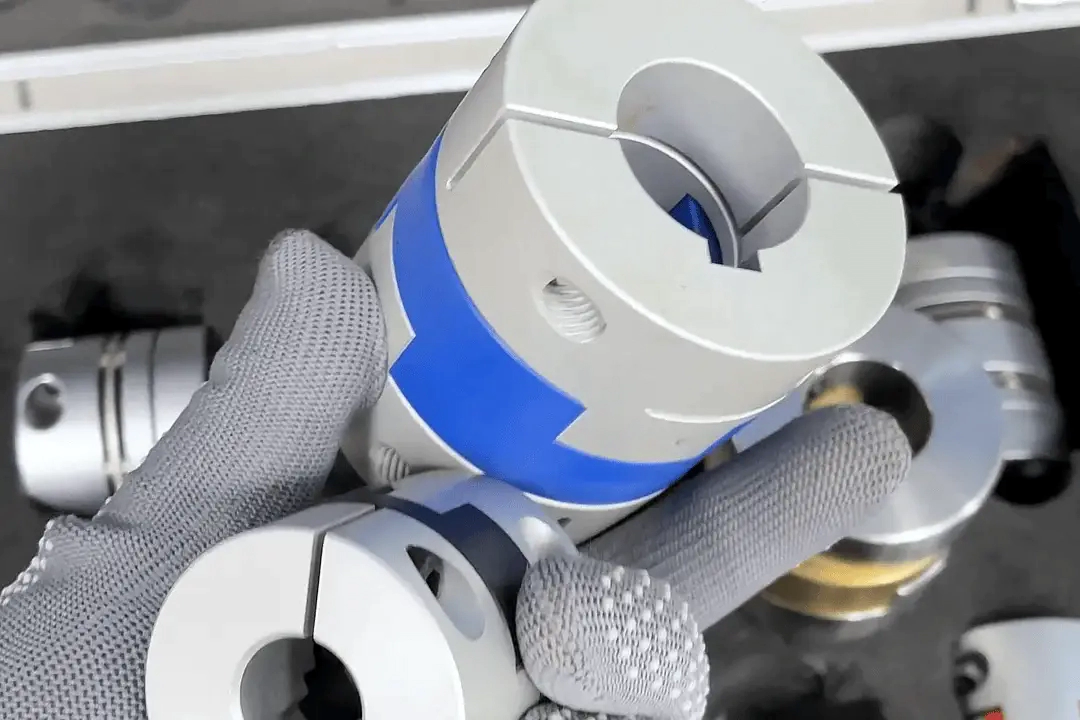
EP6C-25 Clamp Type Oldham Coupling — 25 mm Split-Collar Slider for Mid-Range Servo Drives
The EP6C-25 clamp Oldham coupling is the mid-range workhorse of the EP6C family. With a 25 mm outside diameter, 38 mm overall length, a six-bore catalogue spanning 6 mm through 12 mm, and a torque envelope of 3.0 N·m rated / 6.0 N·m peak at 5 800 rpm, it is the natural fit for the 200-W to 400-W servo motor / 10–12 mm ball-screw drive trains that anchor most laboratory-automation hardware, semiconductor test cells, and benchtop research instruments. Compared to the smaller EP6C-16 and EP6C-20, the EP6C-25 introduces three engineering advantages: substantially higher torsional stiffness (125 N·m/rad), wider parallel-misalignment tolerance (1.9 mm), and a broader bore catalogue that covers both metric and imperial shaft standards.
The architectural value proposition remains the clamp’s: distributed circumferential force on the shaft instead of point loads from a set-screw, no shaft surface marking, full release-and-restore behaviour across hundreds of service cycles, and architectural compatibility with hardened motor shafts. For the laboratory automation use case in particular — where bench equipment is regularly reconfigured, where dispensing heads are removed for cleaning, and where the shaft surfaces on premium servo motors must be returned in factory condition — the EP6C-25 is the right specification.
Specifications
| Parameter | Value |
|---|---|
| Model | EP6C-25 |
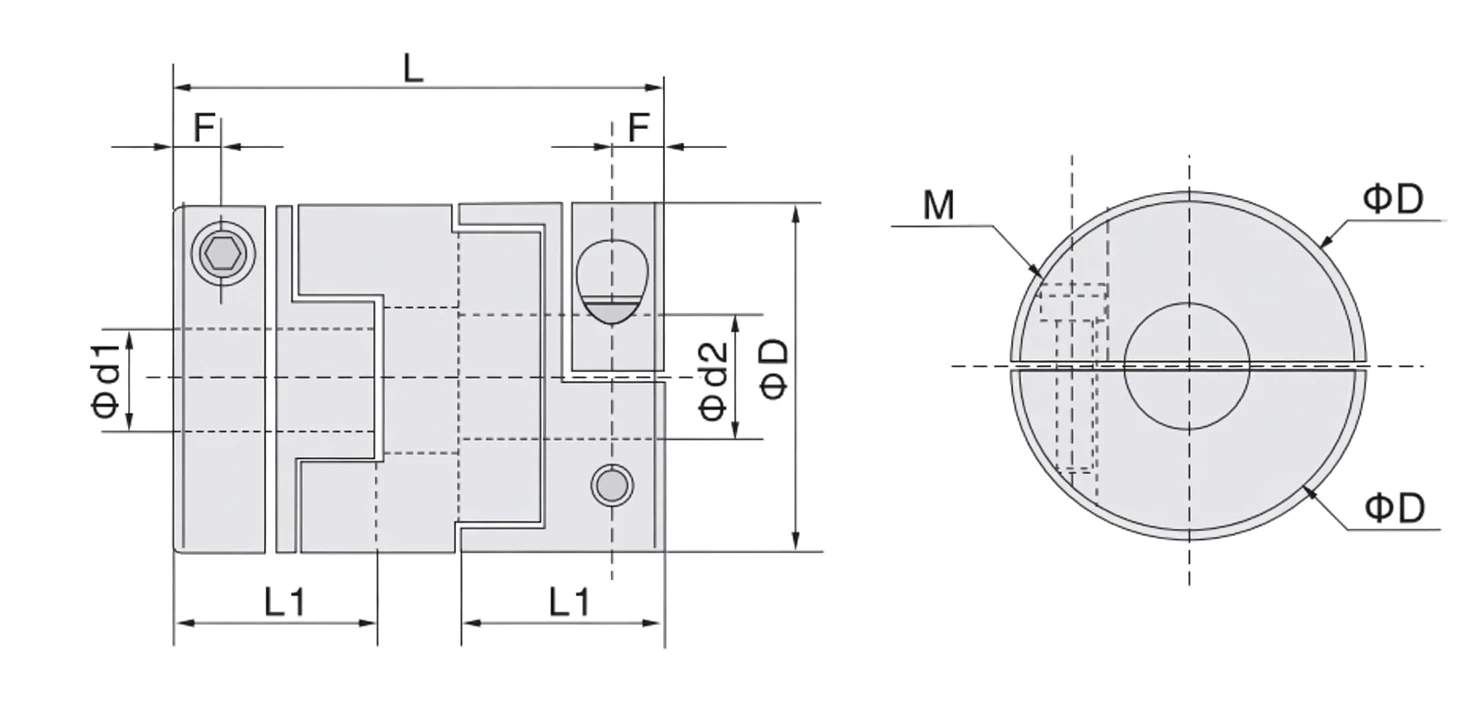
| Outside Diameter (ΦD) | 25 mm |
| Overall Length (L) | 38 mm |
| Hub Length (L1) | 12.5 mm |
| Clamp-Gap Width (F) | 5.0 mm |
| Bore-Centre Distance (E) | 15 mm |
| Bore Range (d1 / d2) | 6, 6.35, 8, 9.525, 10, 12 mm |
| Rated Torque | 3.0 N·m |
| Maximum Torque | 6.0 N·m |
| Maximum Rotational Speed | 5 800 rpm |
| Moment of Inertia | 4.1 × 10⁻⁶ kg·m² |
| Static Torsional Stiffness | 125 N·m/rad |
| Parallel Misalignment | 1.9 mm |
| Angular Misalignment | 3.0° |
| Clamp-Screw Thread | M4 |
| Wrench Tightening Torque | 4.0 N·m |
| Mass (max bore) | 36 g |
| Backlash | Zero |
Materials
Anodised Aluminum Body
Both hubs are CNC-machined from A2017-T4 aluminum and clear-anodised. The split-collar gap is wire-EDM finished to a controlled 5.0 mm width with ±0.05 mm tolerance — tighter than competitor specifications and a critical factor in delivering uniform clamping pressure around the shaft. Hard-anodised black variants are offered for lab-equipment OEMs whose product livery dictates a matt-black surface finish.
High-Performance Slider
Standard slider is POM-H homopolymer — a denser, stiffer grade than the POM-C used in the smaller EP6C sizes. At 3.0 N·m duty, POM-H delivers superior creep resistance under sustained load. For pharma and biotech applications, a USP-Class-VI compliant PEEK slider variant is documented and available within standard lead times. PTFE-filled POM is offered for chemically aggressive process environments.
M4 Heavy-Duty Clamp Screws
Single M4 socket-head cap screw per hub, SUS304 stainless A2-70. The 4.0 N·m wrench torque specification develops approximately 2 600 N of clamping force at the split — sufficient to lock against the 6 N·m peak torque envelope, while remaining well within the screw’s elastic range for long-term service-cycle endurance.
Engineering Logic for Lab Automation
Laboratory-automation hardware exists in a constant state of low-level reconfiguration. A liquid-handling robot built for one assay protocol may be redeployed for a different protocol next quarter, often with a different dispensing head, a different sample-tray geometry, or a different probe-tip type. Each reconfiguration touches the drive train. The maintenance question — can the drive coupling survive these repeated touches without accumulating positional error, surface damage, or particle generation — is exactly the question the clamp-type Oldham architecture is designed to answer.
The EP6C-25 sits at the size sweet spot for this duty class: large enough to handle the torque needs of typical 200–400 W lab-automation servos, with sufficient parallel-misalignment tolerance (1.9 mm) to forgive the realistic assembly tolerance budget of bench-top frame fabrications, and with a bore catalogue that spans both metric (6, 8, 10, 12 mm) and imperial (6.35, 9.525 mm) shaft standards — useful when the host equipment mixes Japanese-spec servos with North-American-spec ball-screws. The shaft-friendly clamp engagement supports the multi-thousand reconfiguration cycle profile of typical lab-automation equipment without becoming a maintenance item.
For background on the broader EP6C family and selection guidance against equivalent Oldham coupling alternatives, our technical resources page is the starting point.
Industry Applications
Liquid-Handling Robots
X / Y / Z-axis servo drives on pipetting robots, dispenser heads, and multi-channel sampling stations. The clamp’s repeat-install behaviour supports the multi-thousand reconfiguration cycle profile typical of high-throughput screening labs.
Microplate Readers & Stackers
Carriage and stacker drives in microplate-based assay systems. Repeat-positioning accuracy after coupling service is a primary specification for these machines.
⚛️ Semiconductor Test Equipment
Probe-card alignment and lift-pin drives on wafer-level test handlers. Symmetric clamp force preserves the micrometre-class repeatability that determines test-yield correlation.
Cell-Culture Automation
Incubator-shaker and bioreactor stirrer auxiliary drives. POM slider isolates the drive motor electrically from the culture vessel, reducing the EMI exposure that can affect sensitive single-cell instruments.
Mass-Spectrometry Inlet Drives
Auto-sampler injection valves and ion-source positioning stages on LC-MS and GC-MS instruments. Clamp engagement preserves shaft hardness on the precision motor outputs typical of these systems.
Diagnostic Centrifuge Drives
Rotor-spindle drives on benchtop diagnostic centrifuges. The clamp eliminates the dimple-on-shaft maintenance issue that has historically caused field-service callbacks.
Why Choose Ever-power
Quality & Regulatory
EP6C-25 production runs under ISO 9001:2015 with full material traceability. Standard documentation pack includes RoHS, REACH SVHC declarations, and conflict-minerals (3TG) status. CE documentation supports machinery-directive integrations. For pharma and biotech customers, USP Class VI material compliance is documented for the PEEK slider variant.
Customisation
Catalogue bores (6, 6.35, 8, 9.525, 10, 12 mm) cover most lab-automation servo and ball-screw shafts. Mixed-bore variants are produced without lead-time penalty. Black hard-anodised hubs, customer logo etching, and tolerance-tightened bores are documented custom-build options.
Engineering Partnership
For OEM lab-automation builders, Ever-power offers a dedicated technical-account-manager assignment with annual volume commitments. Engineering responds within 24 hours in English. CAD files in 12 native formats. Selection guidance and torque-vs-temperature de-rating curves available on request.
Customer Reviews & Case Studies
★★★★★
Chile — Mining Assay Lab Equipment Builder
Used in: Servo-drive coupling on XRF sample-changer carousels deployed in remote mining-site labs.
Feedback: “Equipment is field-serviced by site personnel with limited mechanical-engineering background. The clamp’s torque-screw-then-done simplicity has reduced service callbacks substantially compared to our previous set-screw spec — where over-tightening had been a recurring root cause of slow shaft wear. Documentation pack supports our SAG-mining customer audit requirements without rework.”
★★★★★
Greece — Clinical Diagnostic Manufacturer
Used in: Centrifuge spindle-drive coupling on a benchtop diagnostic centrifuge family.
Feedback: “The PEEK slider variant we specified for our high-temperature reagent step has now passed 2.5 years of three-shift duty in customer hands without a single warranty replacement. The clamp-type interface is also a positive factor in our medical-device CE documentation — clean release-and-reinstall is preferable to set-screw marking from a regulatory perspective.”
★★★★☆
Philippines — Liquid-Handling Robotics Integrator
Used in: Pipette-head Z-axis drive on benchtop high-throughput screening robots deployed in research institutions.
Feedback: “Wide bore catalogue (six options) supports our mixed-vendor servo and ball-screw bill of materials without resorting to bushing adapters. Knock one star only because we wish the catalogue extended to 14 mm bore — the EP6C-32 covers that, but its 32 mm OD is sometimes overkill for our envelope. Engineering team has acknowledged this as a future addition.”
Frequently Asked Questions
Does the EP6C-25 work with mixed metric/imperial shafts?
Yes — mixed-bore variants such as 9.525 × 10 mm or 6.35 × 8 mm are standard production. The clamp engagement does not change with shaft material or thread profile, so a metric servo can be coupled to an imperial ball-screw without bushing or adapter.
What is the cleanroom particle generation profile?
The clamp engagement is non-shedding — no metal swarf is produced during install or removal. Anodised surfaces are particulate-stable. The EP6C-25 has been validated for Class 7 cleanroom service in customer applications; for Class 5 and below, supplementary documentation can be supplied on request.
How does the EP6C-25 perform at extended temperature?
Catalogue specification is for the −40 °C to +100 °C continuous operating range. The PEEK slider variant extends the upper bound to +260 °C. Below −40 °C, the aluminum hub’s coefficient of thermal contraction may reduce clamp force; for cryogenic applications please consult engineering for a custom-toleranced variant.
Can the EP6C-25 carry an OEM private label?
Yes. Laser-etched OEM labels are an established custom-build option with documented quality controls. Minimum order quantity for private labelling is 100 pieces. Specify the etch pattern and approximate location on the hub face at order entry.
Is the EP6C-25 included in your Kanban or VMI programmes?
Yes — the EP6C-25 is a high-volume catalogue line and supports both customer-specific Kanban and vendor-managed-inventory (VMI) programmes. Buffer stock can be held at Ever-power’s facility for JIT replenishment, or staged at a customer-nominated 3PL warehouse. Please contact sales for programme terms.
Specify the EP6C-25 for Lab Automation
For laboratory automation, semiconductor test, and diagnostic instrument OEMs, the EP6C-25 is one of Ever-power’s most-specified mid-range clamp Oldham couplings. Explore the full coupling catalogue, read about our OEM partnership programmes, or proceed to enquiry below.