The centre disc is the only wearing component in an Oldham coupling, and the material it is made from governs almost every practical performance characteristic of the assembly — how long it lasts, how much torque it can carry, how hot it can run, what chemicals it can tolerate, and whether it needs lubrication. Yet disc material selection is one of the most frequently overlooked steps in coupling specification. Many engineers default to whatever material the manufacturer ships as standard without asking whether a different choice would better match their application conditions.
This article provides a detailed, side-by-side comparison of the three most common Oldham coupling centre disc materials — acetal (POM), PEEK, and glass-filled nylon (PA66-GF) — across every parameter that affects real-world service life and reliability.
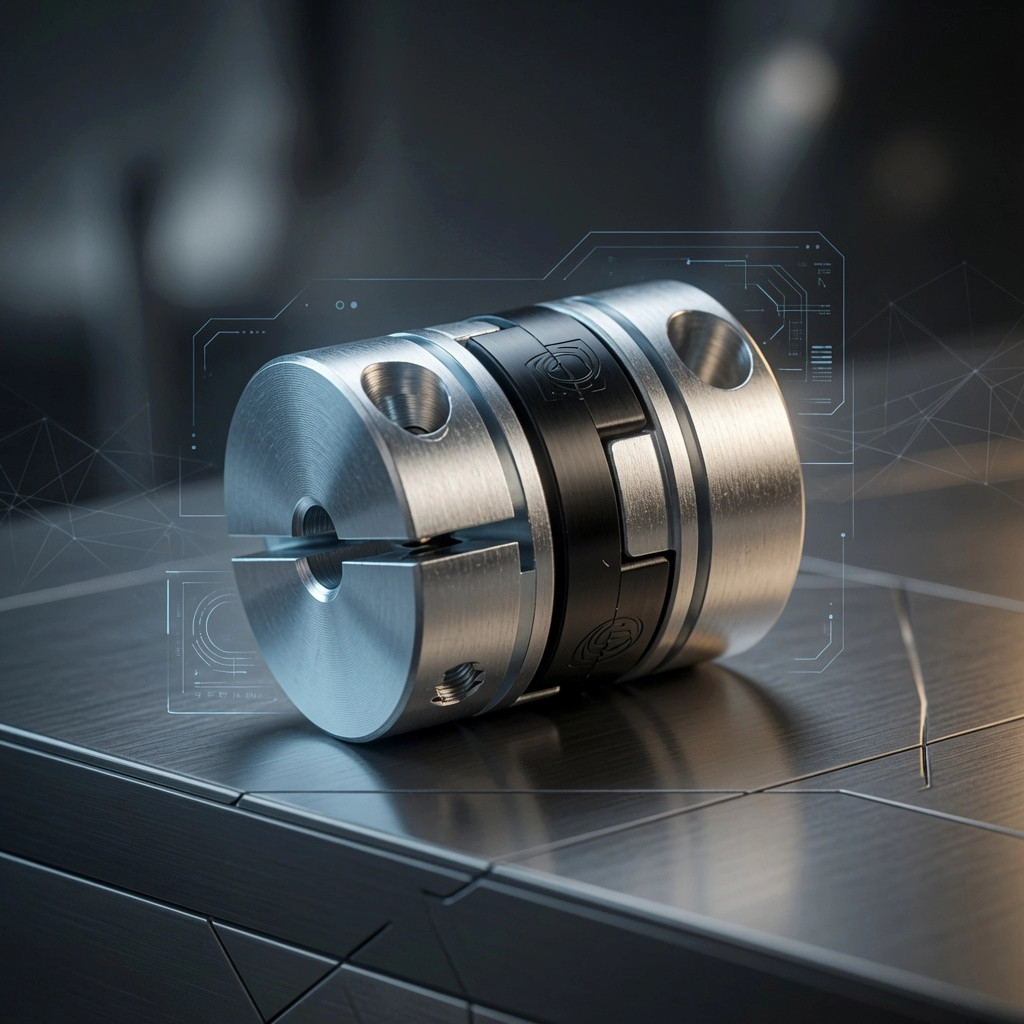
Why Disc Material Matters More Than Hub Material
In a correctly specified Oldham coupling, the centre disc is intentionally the softest component in the assembly. The hub slots — machined from aluminium alloy or stainless steel — are far harder than any polymer disc, and it is the disc that wears preferentially against them. This is by design: a worn disc is a five-minute replacement; a worn hub requires replacing the entire half-coupling and re-aligning the shaft.
The disc material therefore controls the wear rate of the entire coupling. A disc that is too soft for the transmitted torque wears quickly, developing backlash in hundreds of hours. A disc that is appropriately specified can last thousands of hours before requiring replacement. Getting this selection right is the single most effective way to extend the coupling’s useful life between maintenance events.
Acetal (POM): The Universal Default
Polyoxymethylene — sold under trade names including Delrin (DuPont) and Hostaform — is the standard disc material for the vast majority of precision motion applications. Its dominance is well earned.
Key properties: Acetal has excellent dimensional stability, meaning a disc machined to tight tolerances will remain within those tolerances across the full range of normal operating temperatures. Its coefficient of friction against steel and aluminium is low — in the range of 0.1 to 0.3 depending on surface finish and load — which is why acetal discs run dry without lubrication and do so for extended periods without generating significant heat. Its compressive strength (around 130 MPa) and hardness are adequate for light-to-medium torque applications.
Temperature range: Continuous service temperature is typically limited to 90–100°C. Above this range, acetal begins to soften measurably, reducing its compressive strength and accelerating wear rate. In applications where the disc runs close to a warm motor or in a heated enclosure, the disc temperature can significantly exceed ambient air temperature — a factor that is frequently underestimated.
Chemical resistance: Acetal is resistant to most hydrocarbons, oils, alcohols, and dilute acids and bases. It is attacked by concentrated oxidising acids (concentrated nitric, sulphuric), strong alkalis, and some chlorinated solvents. In the context of machine tool coolants, most water-soluble cutting fluids, and light lubricating oils, acetal performs well.
Best for: Servo and stepper motor drives at moderate loads and speeds, encoder connections, CNC machine axes, laboratory instruments, packaging machinery, and any general-purpose precision motion application at normal ambient temperatures.
Glass-Filled Nylon (PA66-GF): The Step Up for Tougher Conditions
Nylon 66 reinforced with 30 percent glass fibre is the natural upgrade choice when acetal begins to show its limitations — particularly when higher torque capacity or higher operating temperature is needed without moving to the premium cost of PEEK.
Key properties: The glass fibre reinforcement increases compressive strength to approximately 180–200 MPa — around 50 percent higher than unfilled acetal — and substantially raises the material’s stiffness and creep resistance under sustained load. This higher strength allows a glass-filled nylon disc to carry higher torque in the same physical size as an acetal disc, or alternatively, to achieve longer service life at the same torque level by reducing the contact stress on the tenon faces.
Temperature range: Continuous service to approximately 120–130°C, with short-term peaks to around 150°C. This gives meaningful headroom over acetal in applications near warm motors or in moderately elevated ambient environments such as machine enclosures in summer.
Chemical resistance: Nylon 66 is more susceptible to moisture absorption than acetal — in humid environments, it can absorb up to 3 percent water by weight, which causes measurable dimensional swelling. For precision zero-backlash applications where the tenon-to-slot fit tolerance is critical, this moisture sensitivity is a potential drawback. Unfilled nylon is also attacked by strong acids; glass-filled grades improve chemical resistance somewhat but do not match acetal or PEEK in this regard.
Wear characteristic: Glass-filled nylon has slightly higher friction against metal than acetal, which means the disc generates marginally more heat per unit of sliding work. In practice this difference is small at normal speeds, but at high speeds combined with significant misalignment, the thermal behaviour of glass-filled nylon is less favourable than acetal.
Best for: Higher-torque servo drives where acetal shows excessive wear, applications in moderately elevated temperature environments, industrial automation in non-humid conditions.
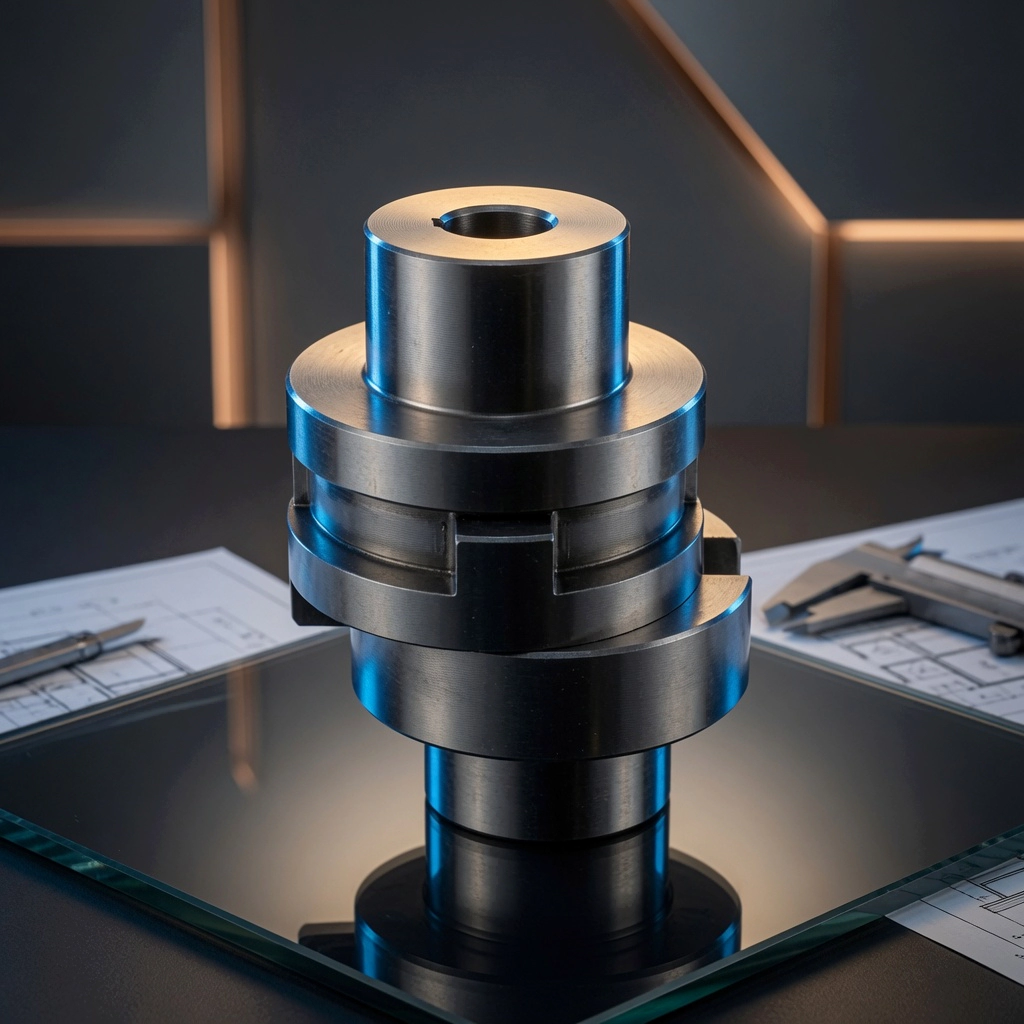
PEEK: The Premium Choice for Demanding Environments
Polyether ether ketone is an engineering thermoplastic in a different performance class from acetal and nylon. Its mechanical properties at elevated temperatures, its chemical resistance profile, and its biocompatibility make it the disc material of choice when the application environment exceeds what acetal or nylon can reliably handle. Its significantly higher cost is justified only when those demanding conditions are genuinely present.
Key properties: PEEK’s compressive strength exceeds 200 MPa at room temperature and — crucially — it retains the majority of this strength at temperatures up to 200°C. This thermal stability means a PEEK disc in a hot environment (near an overheating motor, inside a process enclosure, or operating in high ambient temperatures) maintains its dimensional stability and load-bearing capacity where acetal would have softened and begun to deform.
Temperature range: Continuous service to 250°C, with short-term capability to 300°C. PEEK can withstand repeated autoclave sterilisation cycles (134°C steam) without dimensional change — a property that no other common disc material can match. This makes it the mandatory choice for medical devices that require sterilisation.
Chemical resistance: PEEK has outstanding resistance to nearly all industrial chemicals — concentrated acids (including sulphuric and nitric at moderate temperatures), strong bases, hydrocarbons, ketones, esters, and most organic solvents. The only significant exceptions are certain halogenated solvents and very high-concentration sulphuric acid above 150°C. In pharmaceutical manufacturing environments with aggressive cleaning agents, PEEK is essentially the only viable polymer disc material.
Radiation resistance: PEEK maintains its properties after exposure to gamma radiation sterilisation doses, which degrade many other polymers including acetal. For medical devices sterilised by gamma radiation, PEEK discs are the standard specification.
Cost consideration: PEEK raw material costs approximately 20 to 50 times more than acetal per kilogram. For a small coupling disc, this translates to a meaningful but not prohibitive cost premium — typically 3 to 8 times the price of an equivalent acetal disc. This premium is well justified when the environment genuinely requires PEEK’s properties; it is unnecessary expense in normal industrial applications where acetal performs adequately.
Best for: Medical devices requiring sterilisation, pharmaceutical manufacturing with aggressive CIP/SIP chemicals, high-temperature industrial environments, semiconductor cleanrooms requiring ISO 10993 biocompatibility, and any application where long-term dimensional stability under combined heat and chemical exposure is critical.
Head-to-Head Comparison Table
| Property | Acetal (POM) | Nylon PA66-GF30 | PEEK |
|---|---|---|---|
| Compressive strength | ~130 MPa | ~180 MPa | ~200 MPa |
| Max continuous temp | 90–100°C | 120–130°C | 250°C |
| Autoclave sterilisation | No | No | Yes |
| Dry-running (no lube) | Excellent | Good | Good |
| Moisture absorption | Very low (<0.25%) | High (2–3%) | Very low (<0.5%) |
| Chemical resistance | Good | Moderate | Excellent |
| Gamma radiation resistance | Poor | Moderate | Good |
| Dimensional stability | Excellent | Moderate (moisture) | Excellent |
| Torque capacity (relative) | 1.0× | 1.4× | 1.6× |
| Relative disc cost | 1× | 2–3× | 5–8× |
Special Cases: UHMW-PE, PTFE Composites, and Metal Discs
Beyond the three primary materials, two additional options appear in specialised applications:
UHMW-PE (Ultra-High Molecular Weight Polyethylene): Offers the lowest coefficient of friction of any common disc material and outstanding wear resistance at low contact pressures. It is softer than acetal (lower compressive strength, around 35–50 MPa), which limits its torque capacity significantly. Best suited for very light-duty, low-speed couplings in food-grade or hygienic applications where smooth, quiet operation and minimal particle generation are paramount. Maximum service temperature is low — around 80°C — which further restricts its application envelope.
Metal discs (aluminium or hardened steel): For heavy industrial applications where torque requirements exceed what any polymer disc can carry in the available coupling size, metal discs with lubricated hub slots provide torque capacity 3 to 5 times higher than the equivalent polymer disc. The trade-offs are significant: the coupling requires regular lubrication, loses the electrical isolation property of polymer discs, generates more noise and vibration, and places greater demands on shaft alignment. Metal disc Oldham couplings are a niche product for high-torque, low-to-medium-speed industrial drives where the primary advantage of the coupling is its ability to handle large lateral offsets in a compact package.
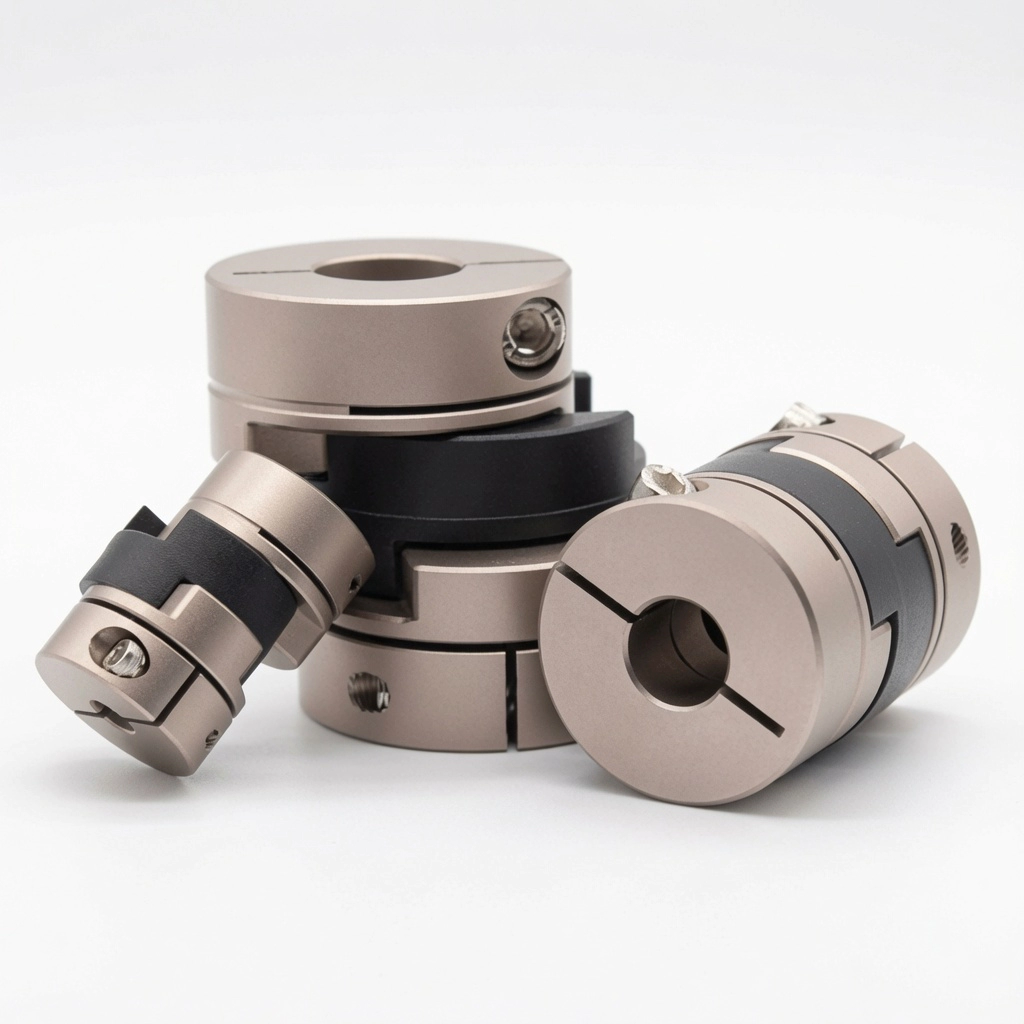
Decision Guide: Which Material for Which Application?
Start with acetal unless one of these conditions applies:
- Operating temperature regularly exceeds 90°C → upgrade to PA66-GF30 or PEEK
- Autoclave or gamma sterilisation required → PEEK only
- Exposure to aggressive chemicals (strong acids, oxidising agents, pharmaceutical CIP) → PEEK
- High humidity environment where dimensional stability is critical → acetal or PEEK (avoid nylon)
- Torque is near the acetal disc’s rated limit and service life is shorter than desired → PA66-GF30
- Food-grade or hygienic application with light loads → UHMW-PE or FDA-grade acetal
- Very high torque in a compact coupling envelope → metal disc with lubrication
Conclusion
Acetal is the right choice for the majority of Oldham coupling applications — it offers the best combination of wear resistance, dry-running capability, dimensional stability, and low cost for normal operating conditions. Glass-filled nylon steps in when higher torque or moderately elevated temperature is needed. PEEK is the premium specification for demanding environments — high temperatures, aggressive chemicals, or sterilisation requirements — where its significantly higher cost is fully justified by the performance it delivers. Matching the disc material to the actual operating conditions is the most cost-effective way to maximise service intervals and minimise the total lifetime cost of the coupling installation.
Browse our Oldham coupling centre disc replacement range in all available materials, or contact our engineering team for material selection guidance specific to your application.