Medical devices impose a set of requirements on their mechanical components that goes well beyond what most industrial applications demand. Precision must be absolute — a diagnostic instrument that produces variable results depending on how its drive mechanism is performing is not just unreliable, it is potentially dangerous. Materials must be biocompatible or at minimum non-contaminating. Surfaces must withstand autoclaving, chemical disinfection, or radiation sterilisation without dimensional change or off-gassing. Noise must be minimised for patient comfort and clinical environment suitability. And the entire assembly must be manufacturable to quality standards that support regulatory approval processes including FDA 510(k) and EU Medical Device Regulation (EU MDR).
The Oldham coupling meets this demanding combination of requirements more completely than any other common zero-backlash coupling type. This article examines the specific applications, material requirements, and design considerations that make Oldham couplings the preferred choice in medical device motion systems.
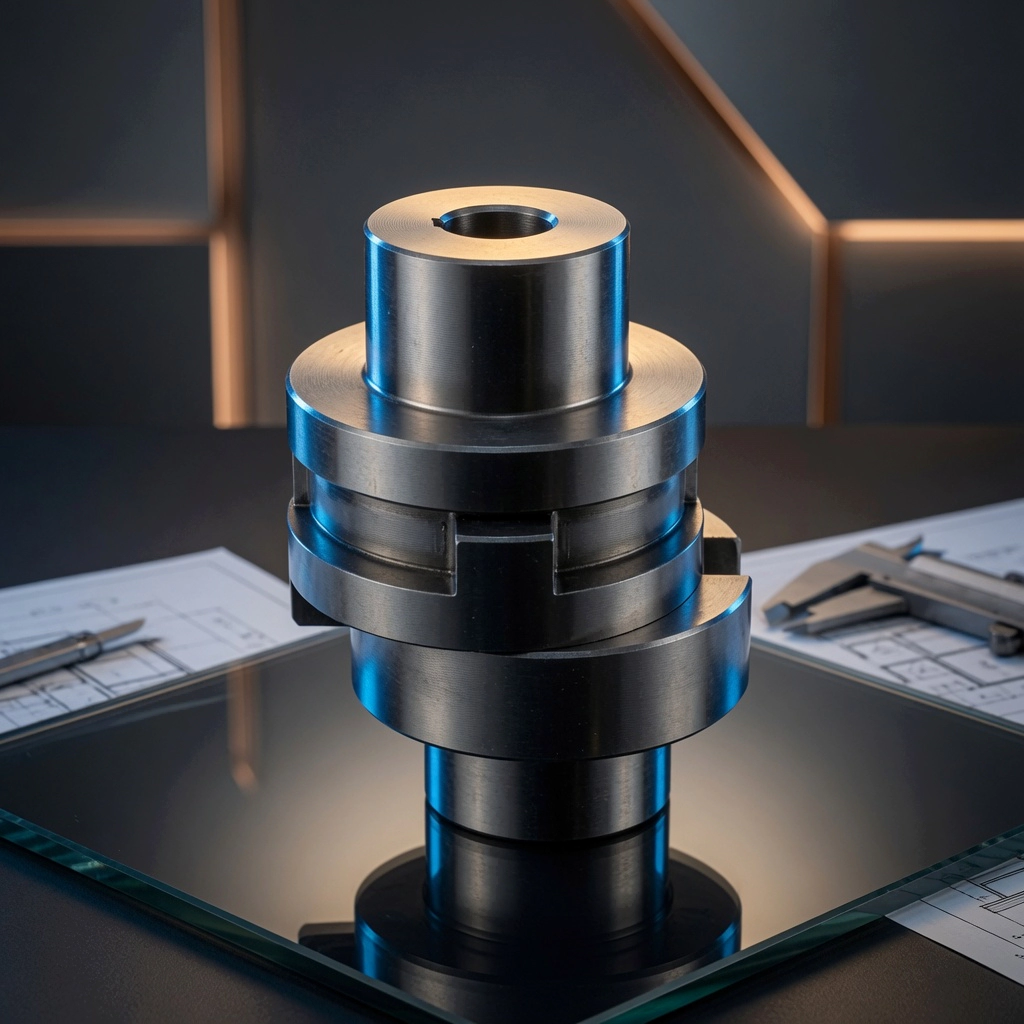
Medical Applications Where Oldham Couplings Appear
CT and MRI Scanners: The gantry rotation system in a CT scanner requires precise, continuous rotation at speeds of 2 to 4 revolutions per second with essentially zero positional error. Any angular error in the drive system produces image artefacts that compromise diagnostic accuracy. The X-ray tube and detector assembly are heavy — the coupling used in the drive train must transmit significant torque while tolerating any lateral offset introduced by thermal expansion of the gantry structure during the scan session. Oldham couplings appear in the slip ring and encoder feedback assemblies within the gantry, where their zero-backlash and electrical isolation properties are particularly valued.
Laboratory Centrifuges: Clinical and research centrifuges accelerate sample rotors to speeds of 10,000 to 100,000 RPM. The coupling between the drive motor and the rotor spindle must be backlash-free to prevent rotor imbalance during acceleration, and must provide electrical isolation to prevent shaft current from reaching sensitive biological samples. The coupling must also survive the aggressive chemical cleaning and disinfection protocols used between sample runs — typically requiring chemical resistance to alcohols, aldehydes, and oxidising disinfectants.
Infusion Pumps and Syringe Drivers: These devices must deliver precise, consistent flow rates of medication or fluids into patients. The drive mechanism — typically a stepper or servo motor driving a leadscrew or peristaltic mechanism — must maintain exact dose volumes per motor step. Coupling backlash translates directly into dose volume error: at each direction reversal (common in some pump protocols), the lost motion produces a brief interruption or over-delivery of flow. In the context of vasoactive drug delivery or chemotherapy, such errors are clinically significant.
Surgical Robots: Robotic surgical systems require sub-millimetre positioning accuracy in the instrument tip, which translates to extreme requirements on every component in the kinematic chain. Backlash anywhere in the drive system introduces tremor or dead-band in the instrument motion that the surgeon experiences as inaccuracy or lag. The coupling between each joint motor and its drive shaft is a critical backlash point; Oldham couplings are used extensively in these assemblies for their proven zero-backlash performance and their ability to accommodate the inevitable small misalignments in complex multi-axis joint assemblies.
Ophthalmic Instruments: Slit lamps, fundus cameras, and optical coherence tomography (OCT) systems use precision motorised stages to position optical elements with micron-level accuracy. The coupling between the focusing motor and the lens stage drive must be zero-backlash so that commanded position changes produce immediate, accurate lens movements — a requirement that becomes critical when imaging structures in the living eye where patient movement and physiological pulsation allow only a narrow time window for accurate image capture.
Blood Analysers and Automated Diagnostic Platforms: High-throughput diagnostic instruments handle hundreds of patient samples per hour, with robotic sample handlers, reagent dispensers, and optical measurement stations all requiring precise, coordinated motion. Zero-backlash couplings in the servo drives of these instruments ensure that sample positioning is accurate to within fractions of a millimetre at each measurement station — a requirement directly linked to diagnostic accuracy and reproducibility.
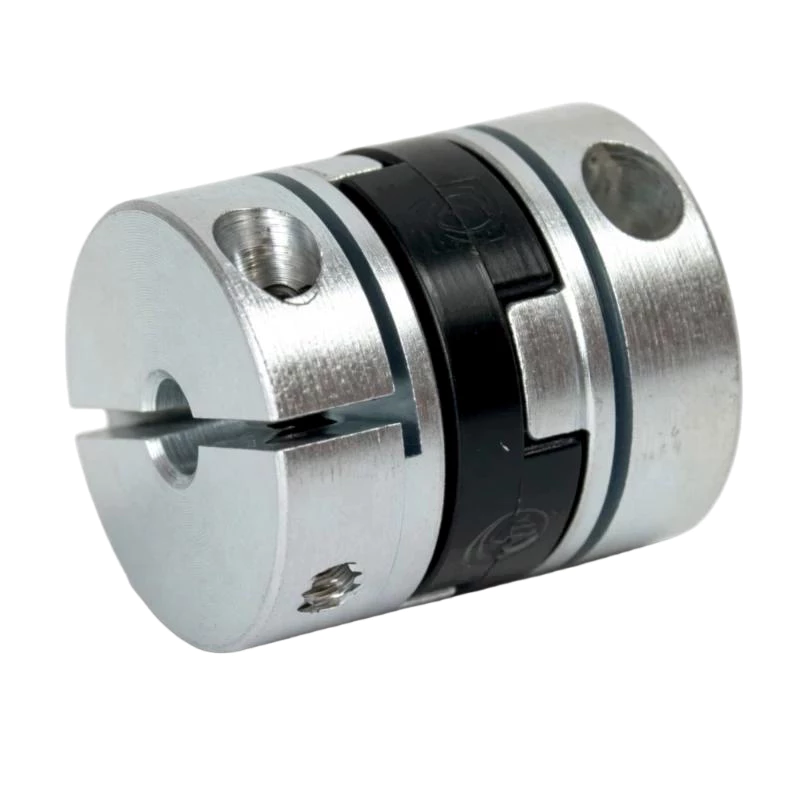
Material Requirements for Medical Applications
Material selection for medical device components is governed by several overlapping requirements that do not apply in industrial settings.
Biocompatibility: Components that are in direct or indirect contact with patients, patient samples, or the sterile field must meet ISO 10993 biocompatibility standards. This standard evaluates cytotoxicity, sensitisation, irritation, and other biological responses to extractable chemical compounds from the material. For Oldham couplings in patient-adjacent applications, hub materials should be Type 316L stainless steel (well-established biocompatibility) and disc materials should be medical-grade PEEK or Delrin AF (PTFE-filled acetal), both of which have extensive ISO 10993 compliance documentation.
Sterilisation resistance: Instruments used in sterile fields must be sterilisable by autoclave (134°C steam), ethylene oxide gas, gamma radiation, or chemical sterilant immersion. Standard acetal discs are not suitable for autoclave sterilisation — they soften above 100°C and undergo dimensional change that affects zero-backlash performance. PEEK discs, rated for continuous use above 250°C, withstand autoclave cycles without dimensional change. For gamma radiation sterilisation, PEEK again outperforms acetal, which can become brittle under radiation exposure.
Particle generation (cleanliness): In cleanroom manufacturing and clinical laboratory environments, every component must generate minimal particles during operation. The Oldham coupling’s sliding disc mechanism does produce microscopic wear particles from the disc tenon surfaces. For cleanroom applications, UHMW-PE and PTFE-composite disc materials offer lower particle generation than standard acetal, at some cost in disc stiffness. Hub surfaces should be free of loose machining burrs and should be passivated (for stainless steel) to prevent oxidation-derived particles.
Chemical resistance: Medical equipment is routinely disinfected with alcohols (isopropanol, ethanol), quaternary ammonium compounds, bleach solutions, and hydrogen peroxide. Most disc materials are resistant to these chemicals, but the designer should verify compatibility against the specific disinfectants used in the application environment. PEEK offers the broadest chemical resistance among common disc materials; standard acetal is attacked by strong oxidising agents including concentrated bleach and hydrogen peroxide at high concentrations.
Electrical Isolation in Medical Devices
IEC 60601-1, the primary international standard for medical electrical equipment, places strict limits on leakage current — the current that can flow from energised parts of the device to earth or to the patient. For patient-applied parts (components that contact the patient), leakage current limits are as low as 10 microamperes under normal conditions.
Motor-driven systems in medical devices are a leakage current risk because the motor windings are at a non-zero electrical potential relative to earth, and capacitive coupling through the motor’s stator-to-rotor gap can drive shaft currents. If the motor shaft is mechanically connected to a patient-adjacent component through an all-metal coupling, a leakage current path exists that may violate IEC 60601-1 limits.
The Oldham coupling’s polymer centre disc breaks this leakage current path entirely. The driving and driven shafts are mechanically connected for torque transmission but electrically isolated by the non-conducting disc. This is a significant design advantage that is not available with all-metal couplings — a bellows, disc, or gear coupling provides no electrical isolation and requires separate isolation provisions (isolation transformers, optical couplers, or insulating shaft segments) to achieve the same result.
Noise and Vibration in Clinical Environments
Clinical environments have specific acoustic requirements. Operating theatre noise levels are limited to protect patient and staff wellbeing. Imaging rooms require quiet operation to avoid patient anxiety. Laboratory environments with open-bench analytical instruments must not transmit vibration that would affect sensitive measurements.
Oldham couplings contribute to low-noise operation through two mechanisms. First, the polymer disc provides a degree of torsional compliance at very small angular deflections — not enough to introduce significant backlash, but enough to attenuate high-frequency vibration transmission between the motor and the driven mechanism. Second, the disc material itself is inherently low in acoustic radiation efficiency: a polymer component generates far less airborne noise from surface vibration than an equivalent metal component.
For the most demanding acoustic applications, UHMW-PE discs offer slightly more vibration attenuation than acetal due to the material’s higher internal damping coefficient, at the cost of slightly lower torsional stiffness.
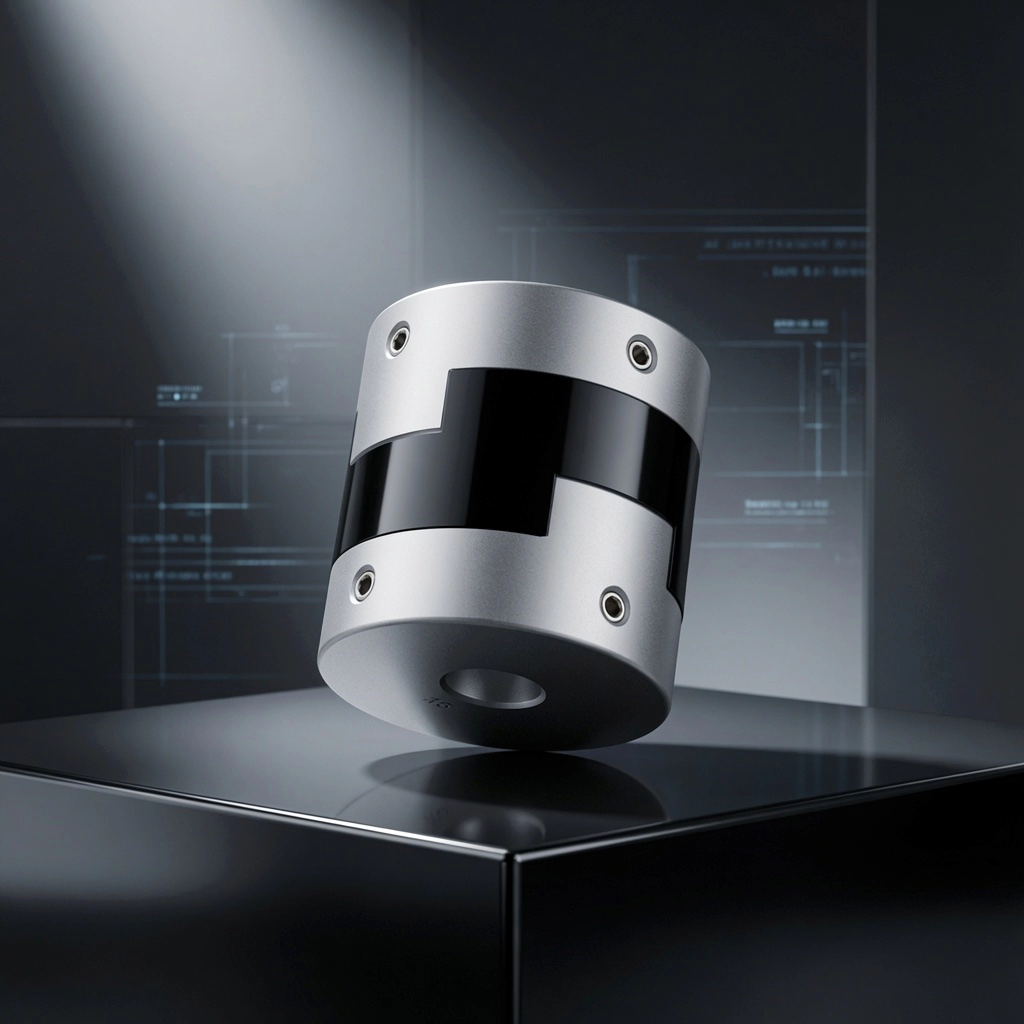
Design and Documentation Considerations for Regulatory Compliance
Medical device manufacturers working under FDA QSR (21 CFR Part 820) or ISO 13485 quality management systems must document the design rationale for every critical component. For couplings in position-critical drive systems, the design file should address:
- Coupling selection rationale: Why the Oldham coupling was selected over alternatives, referencing the specific requirements (zero backlash, electrical isolation, biocompatibility, etc.) that the alternatives could not meet
- Material certification: Material data sheets confirming the disc and hub materials, their ISO 10993 status (if applicable), and their chemical resistance to the expected cleaning and sterilisation agents
- Torque and life calculations: Design calculations showing that the coupling torque rating exceeds the peak system torque with the required safety factor, and estimated disc service life under the expected operating conditions
- Backlash specification: The maximum permissible coupling backlash (typically 0 to 0.1 degrees for medical instrument applications) and the verification method used to confirm compliance at manufacturing
- Change control: The coupling specification (part number, disc material, hub material) locked into the device history record with a change control procedure for any future modifications
Conclusion
The Oldham coupling’s unique combination of zero backlash, electrical isolation, low inertia, chemical resistance, and availability in biocompatible materials makes it exceptionally well matched to the demands of medical device motion systems. From infusion pump dosing accuracy to surgical robot positioning precision, from CT scanner gantry encoding to laboratory centrifuge drive isolation, the Oldham coupling provides the mechanical foundation that allows these instruments to perform reliably at the precision levels that patient care demands. When specified and documented correctly, it also supports the quality management and regulatory compliance processes that bring medical devices to market.
Explore our medical-grade Oldham coupling range with PEEK disc and stainless steel hub options, or contact our engineering team for material compliance documentation and application support.