Product Description
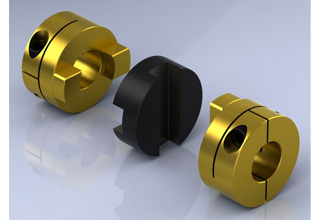
GH Oldham type coupling cross sliding set screw coupling
Description of GH Oldham type coupling cross sliding set screw coupling
>The colloid material is imported PA66, which has good wear resistance, corrosion resistance and electrical insulation
>Sliding design can compensate radial and angular deviation more effectively
>Detachable design, easy to install
>Fastening method of clamping screw
Dimensions of GH Oldham type coupling cross sliding set screw coupling
| model parameter | common bore diameter d1,d2 | ΦD | L | LF | LP | F | M | tightening screw torque (N.M) |
| GH-16X18 | 4,5,6,6.35,7,8 | 16 | 18 | 7.1 | 11.6 | 3.55 | M3 | 0.7 |
| GH-20X25 | 5,6,6.35,7,8,9,9.525 | 20 | 25 | 9.1 | 12.7 | 4.55 | M4 | 1.7 |
| GH-25X28 | 5,6,6.35,8,9,9.525,10,11,12,14 | 25 | 28 | 11.7 | 16.65 | 5.58 | M4 | 1.7 |
| GH-32×33 | 5,6,8,9,9.525,10,11,12,12.7,14,15,16 | 32 | 33 | 14 | 19.5 | 7 | M4 | 1.7 |
| GH-40X35 | 8,9,9.525,10,11,12,12.7,14,14,16,17,18,19,20 | 40 | 35 | 15.5 | 18.4 | 7.75 | M4 | 1.7 |
| GH-45X46 | 8,9,9.525,10,11,12.7,14,15,16,17,18,19,20,22 | 45 | 46 | 21.5 | 18.4 | 9 | M5 | 4 |
| GH-50X38 | 10,12,12.7,14,15,16,17,18,19,20,22,24,25 | 50 | 38 | 16.5 | 15 | 8.25 | M5 | 4 |
| GH-55X57 | 10,12,12.7,14,15,16,17,18,19,20,22,24,25,28,30,32 | 55 | 57 | 27 | 17.5 | 10.5 | M5 | 4 |
| GH-63X47 | 14,15,16,17,18,19,20,22,24,25,28,30,32 | 63 | 47 | 21 | 17.5 | 10.5 | M6 | 8.4 |
| GH-70X77 | 16,17,18,19,20,22,24,25,28,30,32,38,40 | 70 | 77 | 36.5 | 25 | 13.5 | M8 | 10.5 |
| model parameter | Rated torque (N.M)* |
allowable eccentricity (mm)* |
allowable deflection angle (°)* |
allowable axial deviation (mm)* |
maximum speed rpm |
static torsional stiffness (N.M/rad) |
moment of inertia (Kg.M2) |
Material of shaft sleeve | Material of shrapnel | surface treatment | weight (g) |
| GH-16X18 | 0.7 | 0.8 | 3 | ±0.2 | 9000 | 30 | 3.3×10⁻⁷ | High strength aluminum alloy | P A 6 6 | Anodizing treatment | 6 |
| GH-20X25 | 1.2 | 1.2 | 3 | ±0.2 | 7000 | 58 | 1.1×10⁻⁶ | 18 | |||
| GH-25X28 | 2 | 1.6 | 3 | ±0.2 | 6000 | 130 | 3.1×10⁻⁶ | 25 | |||
| GH-32×33 | 4.5 | 2 | 3 | ±0.2 | 4800 | 270 | 9.6×10⁻⁶ | 44 | |||
| GH-40X35 | 9 | 2.4 | 3 | ±0.2 | 3600 | 520 | 2.3×10⁻⁵ | 81 | |||
| GH-45X46 | 12 | 2.8 | 3 | ±0.2 | 3500 | 560 | 3.8×10⁻⁵ | 136 | |||
| GH-50X38 | 19 | 2.6 | 3 | ±0.2 | 3000 | 800 | 1.8×10⁻⁴ | 142 | |||
| GH-55X57 | 22 | 3.3 | 3 | ±0.2 | 2800 | 795 | 8.0×10⁻⁴ | 255 | |||
| GH-63X47 | 19 | 3 | 3 | ±0.2 | 2500 | 1200 | 8.3×10⁻⁴ | 320 | |||
| GH-70X77 | 56 | 3.8 | 3 | ±0.2 | 2500 | 1260 | 3.9×10⁻⁴ | 445 |
/* March 10, 2571 17:59:20 */!function(){function s(e,r){var a,o={};try{e&&e.split(“,”).forEach(function(e,t){e&&(a=e.match(/(.*?):(.*)$/))&&1
How to Identify Signs of Wear or Damage in an Oldham Coupling?
Regular inspection of Oldham couplings is essential to ensure their proper functioning and prevent unexpected failures. Here are some signs of wear or damage to look for during the inspection:
1. Visible Cracks or Deformation: Check the center disc and the hubs for any visible cracks, tears, or deformation. These can be indicators of excessive stress or misalignment.
2. Abnormal Vibrations: Excessive vibrations during operation may suggest that the coupling is not functioning correctly. It could be due to wear in the center disc or improper installation.
3. Unusual Noise: Grinding, clicking, or banging noises during equipment operation may indicate that the Oldham coupling is experiencing excessive backlash or misalignment.
4. Increased Backlash: If there is noticeable play or free movement between the coupling components, it may be a sign of wear in the center disc or worn hubs.
5. Reduced Performance: A decrease in the performance of the machinery or unexpected issues with power transmission could be indicative of coupling problems.
6. Abnormal Heating: If the coupling becomes unusually hot during operation, it may suggest friction or misalignment issues.
7. Excessive Wear on Center Disc: Inspect the center disc for signs of wear, such as grooves, uneven surfaces, or material loss. This may occur over time due to the repeated flexing of the disc.
8. Lubrication Issues: Improper or inadequate lubrication can lead to increased friction and wear in the coupling components.
If any of these signs are observed during the inspection, it is essential to address the issue promptly. Depending on the severity of the wear or damage, the Oldham coupling may require replacement or repair. Regular maintenance and proper lubrication can help extend the life of the coupling and prevent unexpected failures, ensuring smooth and reliable operation in the machinery or equipment.

Differences Between Oldham Couplings and Other Types of Flexible Couplings
Oldham couplings are a type of flexible coupling used in mechanical systems to transmit torque between two shafts. Here are some key differences between Oldham couplings and other types of flexible couplings:
- Mechanism of Torque Transmission: Oldham couplings use a sliding motion between the center disc and the hubs to transmit torque. The center disc has slots that engage with pins on the hubs, allowing for torque transmission while accommodating misalignment. In contrast, other flexible couplings, such as jaw couplings or beam couplings, typically use elastic materials or flexible elements like rubber or springs to transmit torque.
- Misalignment Compensation: Oldham couplings are specifically designed to handle angular misalignment between shafts. They can accommodate parallel misalignment to a limited extent but are not well-suited for axial misalignment. Other flexible couplings like beam couplings or bellows couplings may offer more comprehensive misalignment compensation, including axial misalignment.
- Backlash: Oldham couplings have a small amount of backlash due to the clearance between the center disc and the hubs. This backlash can be beneficial in some applications to reduce shock loads and vibrations. However, other flexible couplings like beam couplings or jaw couplings may have minimal or zero backlash.
- Construction and Materials: Oldham couplings are typically made of materials like aluminum for the hubs and center disc, and acetal or other plastics for the center disc’s sliding parts. Other flexible couplings come in various materials, including aluminum, stainless steel, elastomers, and composite materials, depending on the application’s requirements.
- Operating Speed: Oldham couplings are suitable for moderate to high rotational speeds, but their speed limitations depend on the material and design. Some other flexible couplings, such as bellows couplings, can handle even higher speeds due to their construction.
- Applications: Oldham couplings are commonly used in applications that require moderate torque transmission and angular misalignment compensation, such as pumps, packaging machines, and automation equipment. Other flexible couplings are used in a wide range of applications, including motion control systems, robotics, aerospace, and automotive industries, where specific coupling characteristics are needed.
Choosing the right flexible coupling depends on the specific requirements of the application, including torque, misalignment, speed, space constraints, and environmental conditions. Engineers and designers should carefully consider these factors to select the most appropriate coupling for their mechanical system.

Materials Used in Manufacturing Oldham Couplings
Oldham couplings are commonly made from various materials to suit different application requirements. The choice of material depends on factors such as torque capacity, operating conditions, and environmental considerations. Some of the commonly used materials in manufacturing Oldham couplings include:
- Aluminum: Aluminum is a popular choice for Oldham couplings due to its lightweight and excellent machinability. It is suitable for low to medium torque applications and offers good corrosion resistance.
- Stainless Steel: Stainless steel is known for its high strength, corrosion resistance, and durability. Oldham couplings made from stainless steel are ideal for applications requiring higher torque transmission and operating in harsh or corrosive environments.
- Acetal: Acetal, also known as Delrin, is a thermoplastic material with good mechanical properties. It provides low friction and wear resistance, making it suitable for applications where reduced friction is essential.
- Nylon: Nylon is another thermoplastic material used in Oldham couplings. It offers good chemical resistance and is often chosen for applications with moderate torque requirements.
- Carbon Steel: Carbon steel is robust and cost-effective, making it suitable for heavy-duty applications. It has high strength and can handle higher torque loads compared to some other materials.
- Brass: Brass is a durable metal that offers good corrosion resistance. Oldham couplings made from brass are suitable for certain industrial and marine applications.
The material selection for an Oldham coupling depends on factors such as the torque to be transmitted, operating speed, environmental conditions, and budget constraints. Manufacturers often offer a range of material options to meet the diverse needs of different industries and applications.


editor by CX 2023-12-26